
Reviewed · WORKSHOPS
Weligama: Pottery Workshop with Tea and Snacks
The most interesting part of this Weligama-area outing is its setting: you learn pottery in a traditional potter’s home, not a polished western studio. I like the direct contact with a family craft and the chance to handle clay yourself rather than simply watch a demonstration. I also like the quiet social finish, with tea and local sweetmeats served after the work.
The main consideration is that your piece cannot be glazed or fired during the visit. If you expect a finished souvenir made by your own hands, adjust your expectations. You do receive a pottery piece made by the master potters, while your wheel work is mainly the experience.
Key points to know before booking
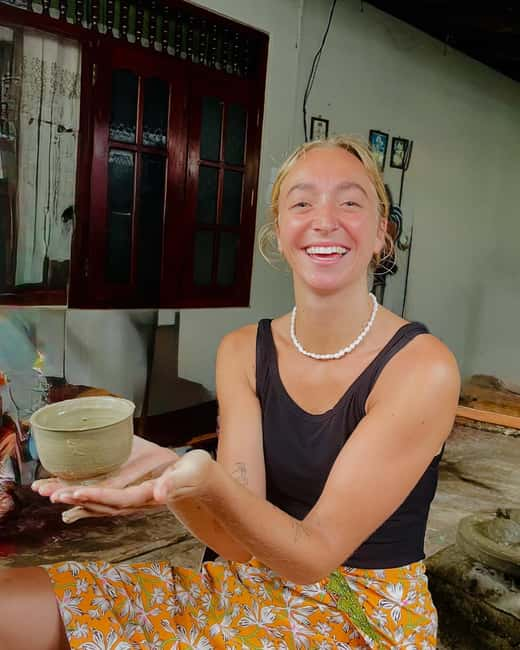
- Traditional family setting: Meet a potter couple who have worked with clay since their teenage years.
- Real wheel time: You get hands-on practice shaping clay on a traditional potter’s wheel.
- Local context: The session covers clay preparation, firing, and the place of pottery in Sri Lankan life.
- Tea with sweetmeats: The final 30 minutes slow down for tea, snacks, and conversation.
- Private and accessible: The experience is for a private group and is listed as wheelchair accessible.
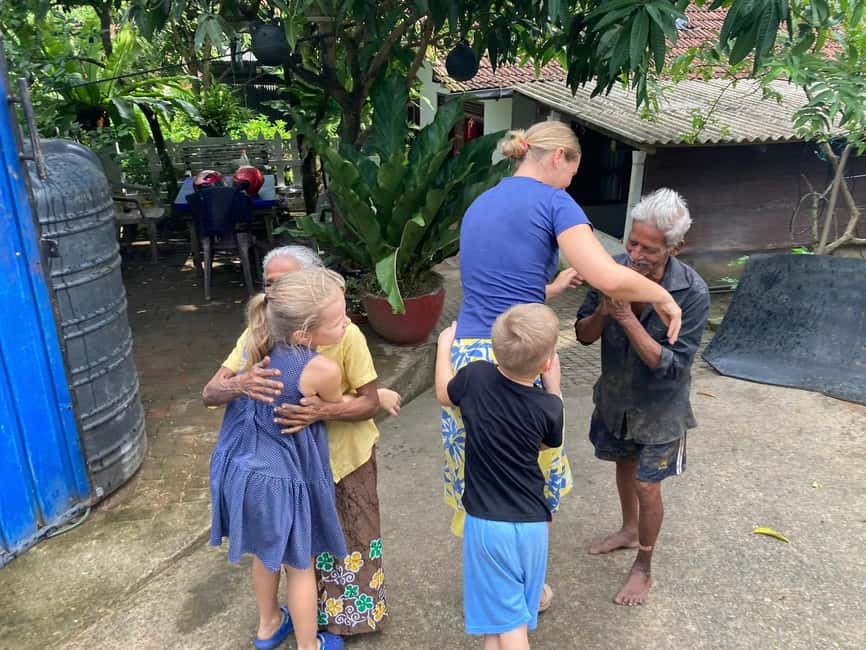
- Good for families: Children receive paint to decorate their own mini-pots.
A family pottery workshop near Weligama
This experience is based in Kotapola and begins at Kumbalgama Railway Station, in the Weligama area. A representative meets you there and helps you connect with the host family. The total time is two and a half hours, with about two hours devoted to the workshop and 30 minutes for tea and snacks.
The hosts are a couple who have been making pottery since they were teenagers. That detail matters. You are not entering a classroom built only for visitors. You are being shown a working tradition that has been part of the family’s life for years, with the hosts explaining how the craft is learned and passed on.
I especially like the scale of this activity. It is a private group rather than a large class, so the tone should feel personal. The English and French language options also make it easier to ask questions about the process, the family’s work, and pottery traditions in Sri Lanka.
The setting is intentionally simple. The organizers clearly explain that this is not a western-standard pottery studio. You may find a practical home workshop rather than spotless worktables, display lighting, or a shop-like finish. For me, that is a strength if you want an ordinary local setting, but it is a drawback if you want a polished art-school lesson.
More craft workshops around Mirissa:
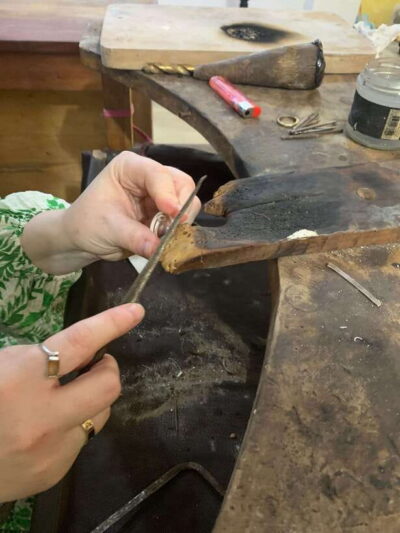
- Galle: Traditional Gems & Jewellery Workshop with Transfers
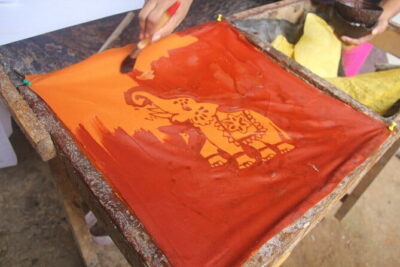
★ 4.9 · 539 reviews - Kandy: Interactive Batik Workshop
★ 5.0 · 51 reviews - Galle : Traditional Jewellery making workshop
★ 4.9 · 34 reviews
Starting at Kumbalgama Railway Station
Your meeting point is Kumbalgama Railway Station. A host representative is scheduled to meet you there, so keep the location details available when you arrange your day. The experience returns to the same station after the workshop and snack period.
The supplied information does not specify a private transfer from your hotel, so you should plan how you will reach the station before booking. The station meeting point gives the activity a clear start and finish, but it also means you should not treat this as a door-to-door excursion unless that is separately confirmed.
The session lasts 2.5 hours, which makes it easy to fit into a half-day plan. Still, pottery is a hands-on activity, and you will get more from it if you arrive without rushing. The wheel section requires attention, and the final tea is part of the experience rather than a quick refreshment stop.
Learning how Sri Lankan pottery begins
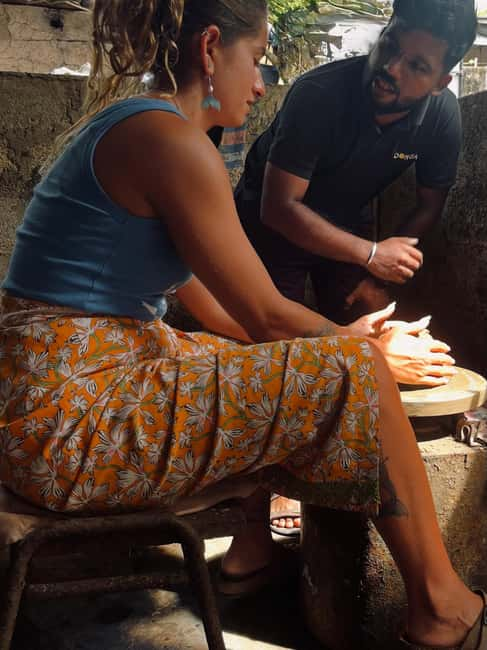
The workshop starts with an explanation of the pottery process. You learn how clay is prepared for the wheel and how it is handled before firing in a kiln. This opening gives useful context before you sit down to work, especially if you have never tried pottery.
Pottery can look simple from a distance. A potter places clay on a spinning wheel, presses with both hands, and somehow produces a balanced vessel. Once you try, you quickly see how much control is involved. The host’s explanation helps you understand why the clay must be prepared properly and why the wheel work takes practice.
The history section also gives the activity more meaning. You are not only making a shape from wet clay. You are seeing how a practical household craft has been kept alive by local artisans and families. The hosts’ own experience, beginning in their teenage years, gives the talk a personal link to the wider tradition.
The activity is best approached with curiosity rather than a demand for a perfect result. Your first pot may lean, widen, or collapse. That is part of the lesson. The point is to feel the clay respond to pressure and to see how a skilled potter corrects its shape.
Taking a turn on the traditional wheel
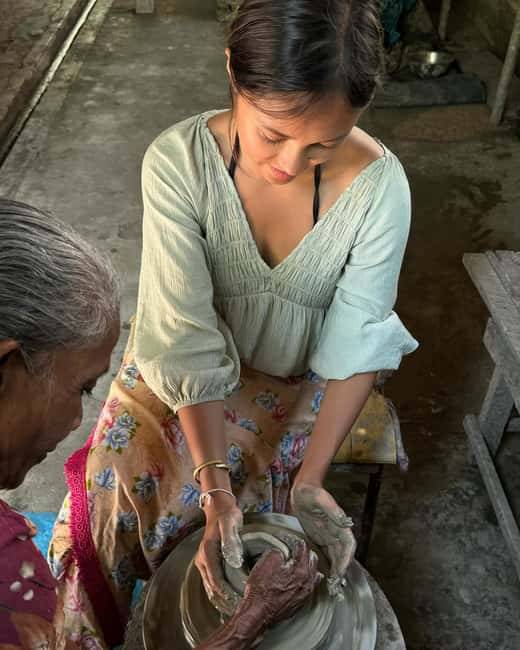
The wheel is the heart of the workshop. You get time to create your own piece, and the available information indicates that you can make more than one vessel if your time and skill allow. The important word here is try. This is not presented as a professional certification class, and you should not expect a flawless pot after one session.
A good pottery lesson gives you time to practice without making you feel rushed. The host explains the basic movements, then lets you work with the clay. You may need several attempts before the material begins to feel manageable. That hands-on time is one of the strongest reasons to book this experience.
The wheel also creates a useful connection between explanation and action. You first hear about clay preparation, then you feel why consistency matters. You hear about forming a vessel, then you learn how quickly too much pressure can change the wall of the pot.
The activity does not include instant glazing or firing. This is the clearest practical limitation. Your piece cannot be finished and taken home as a fired keepsake during the visit. Instead, you receive a pottery item made by the master potters. You can also buy additional pottery as a personal purchase, but those purchases are not included in the $40 price.
That arrangement is worth understanding before you reserve. The souvenir you take home is made by the skilled potters, while your own work remains the memory and the lesson. If you want to carry away a usable bowl or cup shaped by your own hands, this is not the right format.
A few more Mirissa days worth a look
- Snorkeling with Turtles in Mirissa
★ 5.0 · 268 reviews - Whale Watching Mirissa with ( WWC )
★ 5.0 · 252 reviews - Ride a Wave Surf School Weligama Sri Lanka
★ 5.0 · 161 reviews - Whale Watching Mirissa with Eagle Eye
★ 4.5 · 128 reviews
Tea, sweetmeats, and time to talk
After roughly two hours of pottery, the experience closes with tea and local sweetmeats. This takes about 30 minutes, giving you time to sit down and talk with the organizer after the practical work.
I like this ending because it fits the setting. You are not pushed straight back to the station after the wheel stops. Tea gives the workshop a social rhythm and lets you ask follow-up questions about pottery, family work, or daily life.
The sweetmeats add a small but useful local touch. The information does not list the exact snacks, so you should not book this expecting a particular dish. Think of it as a simple refreshment period rather than a full meal.
Tea is also helpful if you want a calmer finish after concentrating on the wheel. Pottery demands patience, and the final conversation gives the outing a natural pause before you return to Kumbalgama Railway Station.
A thoughtful choice for children
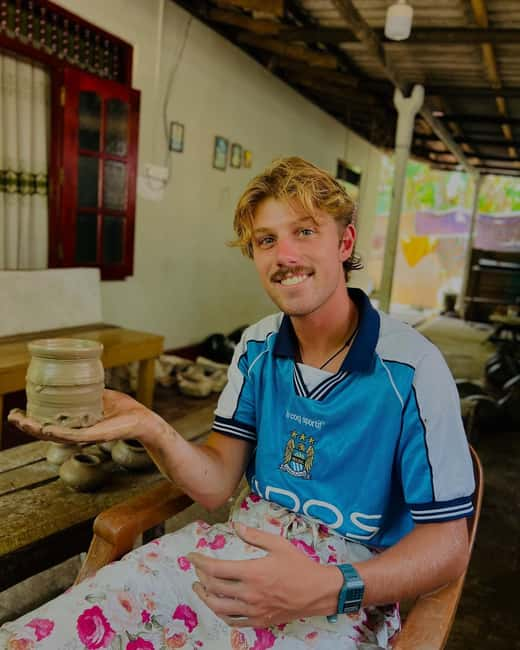
Children are included in a practical way. They receive paint to decorate their own mini-pots, so they are not expected to manage the full wheel process for the entire session. This gives younger participants a creative task suited to the workshop.
The activity is not suitable for babies under one year old. The information does not give an upper or lower age range beyond that, so families with older children should confirm any age-specific needs before booking.
For a family group, the private format is useful. Children can see the wheel, learn how clay is prepared, and then decorate a small pot. Adults can focus on the more demanding wheel work without asking a very young child to sit through a long technical explanation.
The paint activity also makes the outing more than a short demonstration for children. Just remember that this is a real pottery home and not a purpose-built children’s attraction. You should be comfortable with a simple, hands-on setting.
What the $40 price includes
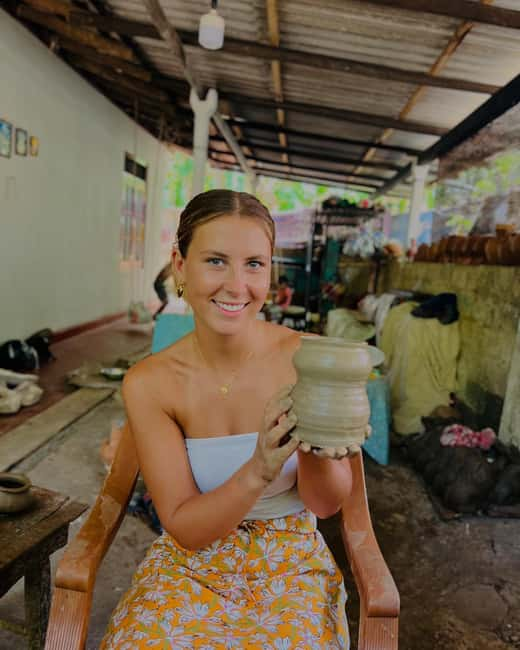
At $40 per person, the cost covers the main elements of the experience:
- Hands-on pottery work
- An introduction to Sri Lankan pottery traditions
- An explanation of clay preparation and firing
- Time on the traditional wheel
- Tea and local sweetmeats
- A pottery piece made by the master potters
- Paint for children decorating mini-pots
The value depends on what you want from the outing. If you are comparing it with a standard sightseeing stop, the price may seem high for two and a half hours. But this is not just an observation visit. You receive personal instruction, time at the wheel, food, and a handmade souvenir, while also helping support a local pottery family.
The price does not include extra pottery purchases. It also does not provide instant glazing or kiln firing for the item you make. Those limits should be clear before you compare this with a western ceramics studio, where a finished personal piece is often the main product.
I see the strongest value in the access. You are paying for time with working potters, not simply for an object. The session offers a closer look at how the craft is taught and maintained, and the money helps the family earn from its skill while encouraging the next generation to continue the work.
Who will enjoy this most

I would recommend this workshop to you if you enjoy local crafts, family-run activities, and practical lessons. It suits people who would rather spend an afternoon learning one skill than rushing between several sights.
It is also a good choice if you want a cultural activity that does not depend on a large group. The private format allows the host to focus on your questions and give you time with the clay. The English and French instruction options are useful for clear communication during the wheel work.
Families may find it appealing because children have their own mini-pot activity. Couples and solo visitors can also get a lot from the personal setting and the tea conversation afterward.
You should think twice if your main goal is to take home a finished piece that you personally made. Without instant glazing or firing, that part is not available. You should also expect a modest home workshop, not a western-style studio with every step packaged for convenience.
The activity is listed as wheelchair accessible, which makes it worth considering if access is important to you. Since the available information does not describe the exact layout or wheel setup, you should confirm any specific access requirements before arrival.
How this compares with a regular pottery class
A standard studio class often focuses on producing a finished object. You may receive prepared clay, use modern equipment, glaze your work, and return later for the fired result. This workshop takes a different path.
Here, the focus is on the people and process. You learn about preparing clay, hear about the local pottery tradition, try the wheel, and spend time with the family. The piece made by the master potters gives you a physical reminder of the visit, but the main result is the experience of learning from them.
That difference is important. If you want polished instruction in a purpose-built room, choose a western-style ceramics class. If you want to see pottery as a living family trade in a local home, this workshop makes more sense.
The warm response from people who attended also fits the design of the activity. The strongest themes are clear English communication, patient time at the wheel, a warm welcome, interesting explanations, and an enjoyable tea break. Those are exactly the areas where this workshop earns its price.
Booking and practical details
You can cancel up to 24 hours before the activity for a full refund. The reserve-now, pay-later option lets you hold a place without paying immediately, which is useful if your Sri Lankan plans may shift.
The workshop lasts 2.5 hours, but you should allow extra time around the start and finish in case you need to reach the station. Check the available starting times before choosing the day.
The activity is offered in English and French. It is a private group, and a representative meets you at Kumbalgama Railway Station. Weapons, sharp objects, alcohol, drugs, fireworks, explosives, nudity, and see-through clothing are not allowed.
The listing uses Weligama for the experience while giving Kotapola as the location and Kumbalgama Railway Station as the meeting and return point. Check the exact map pin and meeting instructions before setting out so you arrive at the right place.
Should you book this pottery workshop?
Book it if you want personal contact with a local craft family, a real attempt at the potter’s wheel, and a relaxed tea finish. The family setting, clear instruction, and private format make this more meaningful than a quick craft demonstration.
Skip it if you need a finished pot made by your own hands or expect a modern studio with instant glazing and firing. At $40, the value lies in the lesson, conversation, local food, and support for the potters, not in producing a polished object on the day.
For most people who enjoy hands-on cultural experiences, this is a good use of a half-day near Weligama. Arrive open to a simple setting, accept that the clay may not obey you, and let the potters show you why this old skill still matters.
FAQ
Where does the pottery workshop meet?
The meeting point is Kumbalgama Railway Station. A representative from the host meets you there, and you return to the same station after the activity.
How long does the experience last?
The total duration is 2.5 hours. About two hours are used for the pottery workshop, followed by 30 minutes of tea and local snacks.
Can I glaze or fire the piece I make?
No. Instant glazing and kilning are not available during the workshop. You receive a pottery piece made by the master potters instead.
Is tea and food included?
Yes. Tea and local sweetmeats are included at the end of the experience.
Are children allowed to participate?
Yes. Children receive paint to decorate their own mini-pots. The activity is not suitable for babies under one year old.
Is the workshop wheelchair accessible?
Yes. The activity is listed as wheelchair accessible. For specific access needs, confirm the workshop setup before arrival.
Newly listed around Mirissa
- Yala National Park Private Safari (All Inclusive) From Mirissa★ 4.5 · 4 reviews
- Whale Watching Experience in Mirissa★ 4.5 · 6 reviews
- Whale Watching Mirissa Ultimate Tour in Sri Lanka with Breakfast★ 4.5 · 6 reviews
- Snorkeling with Turtles in Mirissa★ 5.0 · 28 reviews
- Surf Camp in Weligama Beach Sri Lanka★ 5.0 · 5 reviews
- Sinharaja Rain Forest Day Tour from Mirissa, Galle, Bentota Area★ 5.0 · 7 reviews
- Scuba Diving in Mirissa★ 5.0 · 12 reviews
- Snorkeling with Sea Turtles in Mirissa (Pickup and Drop included)★ 4.5 · 16 reviews
Workshops, compared.

Traditional Gems & Jewellery Workshop with Transfers
Read our review →
Interactive Batik Workshop and Lessons in Sri Lanka
Read our review →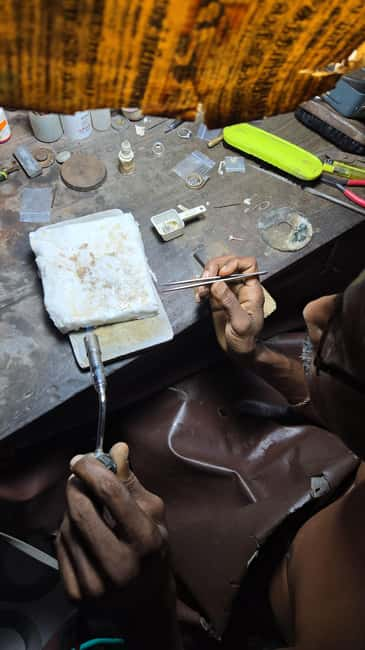
Jewelry Workshop Experience 3-6 Hours-Free Jewelry
Read our review →Browse the lists this tour appears in