
Reviewed · WHALE WATCHING
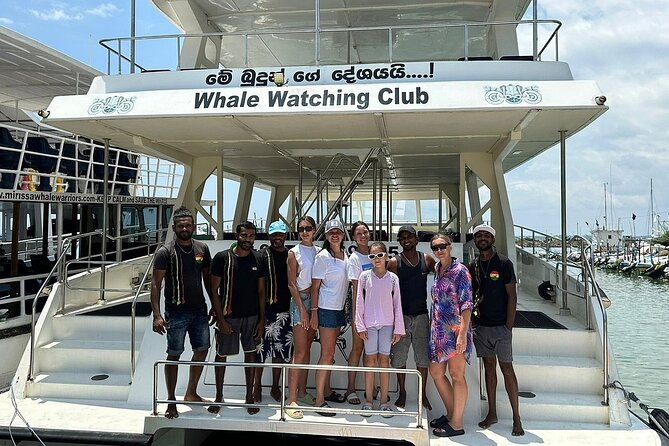
Whale Watching Mirissa with ( WWC )
Mirissa’s early-morning sea safari has one honest selling point: you are not promised a whale. Whale sightings run at about 50 percent, while dolphins are reported at about 90 percent. That makes this a better choice for someone who wants a well-run morning on the Indian Ocean, not a guaranteed wildlife performance.
I like the roomy Queen Whale catamaran, which carries up to 150 people but is limited to 45 for this tour. I also like the thoughtful extras: tea or coffee soon after boarding, breakfast, fruit and drinks, and a planned sea swim on the way back. The main drawback is the sea itself. The boat can roll hard, and even a comfortable vessel will not prevent seasickness on a rough morning.
Key points at a glance

- Captain Manoj’s local experience: He has more than 25 years of sailing experience in southern Sri Lanka and 13 years working on whale-watching boats.
- A spacious 60-foot catamaran: Queen Whale is 60 feet long, 20 feet wide, and limited to 45 passengers for more room around the railings.
- Realistic wildlife odds: Dolphins are more likely than whales, with stated sighting rates of 90 percent and 50 percent.
- Breakfast and snacks included: Tea, coffee, breakfast, fruit, soft drinks, and later snacks are part of the morning service.
- A sea swim is planned: The boat stops during the return trip for a swim, so bring suitable clothes and a towel.
- A wildlife-first approach: The crew says it avoids chasing whales and tries to watch their natural behavior from a respectful distance.
Leaving Mirissa Harbour at 6:00 am

The day begins early at the Whale Watching Club office on Harbour Road in Mirissa. You need to be there for the 6:00 am departure, a useful start time because the sea is often calmer in the morning and boats can reach open water before the main crowd gathers.
That early start also changes the mood of the trip. You are not simply boarding a sightseeing boat after breakfast. You are heading out while the coast is still quiet, with the chance to see dolphins in the soft morning light. Several accounts describe the boat leaving ahead of many other vessels, which can give the crew more room to search before boats gather around the same sighting.
The meeting point is near public transport, and the office has been used as a place to wait and use the toilet before departure. Confirmation is provided at booking, and the activity returns to the same harbour at the end.
More Whale Watching Trips in Mirissa
- Whale Watching Mirissa with Eagle Eye
★ 4.5 · 128 reviews - Snorkeling with Whales in Mirissa
★ 4.5 · 42 reviews - All Inclusive Mirissa Whale and Dolphin Watching Boat Ride
★ 4.5 · 29 reviews
Queen Whale gives you room to watch
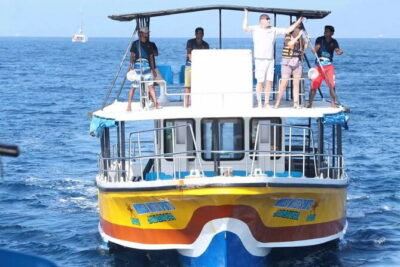
The boat is the heart of this experience. Queen Whale is a 60-foot-long, 20-foot-wide luxury catamaran powered by two Yamaha 385-horsepower engines, with a reported top speed of 13 knots per hour. Its maximum capacity is 150 passengers, but Whale Watching Club limits this outing to 45.
That limit matters. Whale watching is not enjoyable if you must fight for a view or squeeze past people every time something surfaces. A smaller passenger load gives you a better chance of reaching the rail, moving around the boat, and finding a seat without crowding.
The boat has been described as clean, modern, well maintained, and roomy. There is a toilet onboard, and the wide layout helps you spread out. It is also reported to be one of the larger boats operating from Mirissa, which can make the ride feel more secure than a small open craft.
Still, do not confuse size with complete stability. The boat rolls on ocean swells, and several people have become seasick. If you are sensitive, take a seasickness tablet before departure if you normally use one. Tablets have also been offered onboard, but it is wiser not to wait until you feel ill.
Captain Manoj and the search for marine life
Captain Manoj is both the owner and captain of the operation. He has more than 25 years of sailing experience in southern Sri Lankan waters and has spent 13 years captaining whale-watching boats.
That background matters because finding marine life is not just a matter of driving offshore and hoping. The crew watches the water for blows, fins, movement, birds, and dolphin activity. The captain and crew also point out what they see, helping you understand the difference between a whale surfacing, a dolphin pod moving fast, and a smaller animal briefly appearing beside the boat.
The crew’s stated odds are refreshingly clear:
- Whale sighting: about 50 percent
- Dolphin sighting: about 90 percent
Those figures should guide your expectations. On one morning, you may see a fin whale or blue whale after a long search. On another, you may spend much of the outing with dolphins and return without a whale. You are paying for the boat trip, crew effort, and chance to find wild animals, not for a captive display.
Dolphins may become the main event
Dolphins are the most dependable part of the safari. Sightings have included large pods, with one group estimated at around 200 animals. You might see dolphins racing alongside the catamaran, leaping through the wake, or moving together in a fast hunt.
Different kinds have been seen, including Risso’s dolphins, false killer whales, and other dolphin species. Other marine life reported during outings includes sea turtles, flying fish, manta rays, tuna, pilot whales, and whale sharks.
This variety is why I would treat the trip as a general marine safari rather than a narrow whale hunt. If you see only dolphins, that can still mean long stretches of active wildlife watching. The best encounters happen when the animals choose to approach or cross the boat’s path, rather than when several boats crowd them.
Same base, a completely different kind of day out:
- Snorkeling with Turtles in Mirissa
★ 5.0 · 268 reviews - Ride a Wave Surf School Weligama Sri Lanka
★ 5.0 · 161 reviews - From Mirissa / Galle / Tangalle to Yala Safari & Drop- Ella
★ 4.6 · 124 reviews - Mirissa: Snorkeling Experience with Turtles
★ 4.5 · 123 reviews
What whale sightings are really like
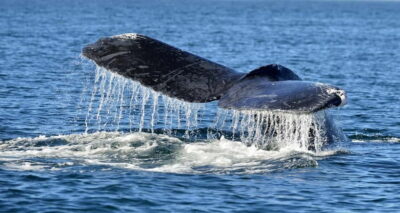
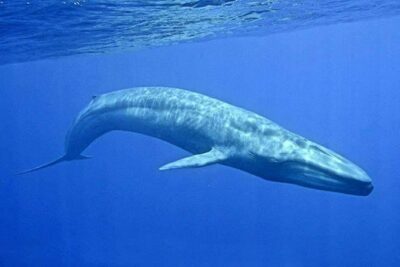
Whales are the reason most people book, but the ocean does not follow a schedule. Fin whales and blue whales have been seen, sometimes several fin whales during one trip. A blue whale and a fin whale have also appeared on the same morning, with the boat following the blue whale as it surfaced repeatedly to breathe.
A whale sighting can be brief. You may see a blow, a back, or a fin before the animal disappears below the surface. If you are lucky, it may surface several times near the boat, giving you a chance to appreciate its size and movement rather than grabbing one rushed photograph.
The crew says it avoids chasing whales and follows their natural behavior. That is important to me. Some boats may crowd a whale when one appears, but this operation aims to keep a respectful distance. In at least one especially fortunate encounter, the whale came close only after other boats had left.
There is still a practical tension here. The crew wants to give you a sighting, and some accounts describe the boat returning farther offshore after the main trip to look again. That effort can be rewarding, but responsible wildlife watching always requires patience. You should be comfortable with the idea that the animal decides the terms.
Breakfast, drinks, and the sea swim
The service begins soon after boarding. Tea and coffee are commonly offered, followed by breakfast while the boat is moving. Food has included sandwiches, fruit, a fruit bowl, and later snacks such as roti. Soft drinks and additional refreshments are also provided.
This is more than a pleasant extra. A five-hour boat trip is a long time to spend in sun and wind, and breakfast helps make the morning comfortable. If you have food needs, contact the operator in advance. Special breakfast arrangements have been made through direct communication, though the supplied information does not list a standard dietary menu.
During the return trip, the boat stops for a sea swim. The description allows about 30 minutes, while some accounts describe a shorter swim, so think of it as a planned stop rather than a fixed-length water session. Bring swim clothes, a towel, and anything you need to change afterward.
The swim takes place away from the wildlife activity. It is not a chance to swim with dolphins or whales, and that separation is a positive feature. You get a refreshing break from the boat without turning wild animals into an attraction.
The price and what it buys you
At $55 per person, this is not the cheapest possible boat outing from Mirissa, but the price looks reasonable if the promised elements matter to you. You are getting roughly five hours on the water, a large catamaran, a passenger limit of 45, captain and crew service, breakfast, drinks, snacks, and a sea swim.
The value is strongest for people who care about comfort and space. A cheaper trip may still find whales, but a crowded boat can make the experience tiring even when the wildlife is excellent. Here, the smaller passenger load gives you a better chance of finding a clear viewing position.
The price does not buy certainty. The operator clearly states that whale sightings are about 50 percent. If you would be disappointed by dolphins, turtles, or a pleasant ocean trip without a whale, no price makes this a safe purchase. If you view the whale as a bonus and the safari as the main product, the value is much better.
The tour is highly rated overall, with 98 percent recommendation and a 4.9 rating from 252 ratings. That strong response matches the most consistent strengths: the clean boat, careful crew, food, space, and honest expectation setting. It does not remove the basic risk of weather, rough seas, or animals staying out of sight.
Who should book this morning

I would choose this trip if you want a less cramped boat, a full morning on the water, and an operator that talks plainly about whale odds. Families can take part, and most people can participate, but the early start and rolling sea are worth considering for young children or anyone prone to motion sickness.
It also suits people who care about wildlife conduct. The stated approach is to avoid chasing and to watch animals from a respectful distance. You will still be part of a busy whale-watching area, so conditions can vary, but the crew’s policy gives you a useful standard to look for.
You may want to skip it if you need a guaranteed whale, dislike open-water motion, or cannot manage a 6:00 am meeting time. The swimming stop is optional in spirit, but you should bring the right clothing if you want to take part.
The activity requires good weather and a minimum number of participants. If poor weather cancels the trip, you can receive a different date or a full refund. You can also cancel for a full refund up to 24 hours before the start time. Cancellations or changes within 24 hours are not refunded or accepted.
Should you book Whale Watching Club?
Book it if you can accept uncertainty and want the best chance of enjoying the morning even without a whale. The 45-person limit, wide Queen Whale catamaran, food service, experienced captain, and sea swim give the outing more substance than a simple race offshore and back.
My practical advice is to book this as a marine wildlife safari, with whales as the hoped-for highlight. Take seasickness precautions, arrive ready for an early start, carry swim clothes, and keep your camera ready. If the ocean cooperates, you may see a fin whale or blue whale. If it does not, a large dolphin pod, turtles, flying fish, good food, and a warm swim can still make the $55 worthwhile.
FAQ
Where does the whale-watching tour start?
It starts at the Whale Watching Club office on Harbour Road in Mirissa, Sri Lanka.
What time should I arrive?
The tour starts at 6:00 am. You should arrive at the meeting point before departure.
How long does the tour last?
The advertised duration is approximately five hours, and the boat returns to the original meeting point.
How likely is it to see a whale?
The operator states an estimated whale sighting chance of 50 percent. Whales are wild animals, so a sighting is not guaranteed.
How likely is it to see dolphins?
The stated dolphin sighting chance is 90 percent.
How many people can join the boat?
The tour is limited to a maximum of 45 participants, even though Queen Whale can carry up to 150 passengers.
Is swimming included?
The boat stops during the trip for a sea swim. Bring suitable swim clothes and other necessary items.
What happens if bad weather cancels the tour?
You will be offered a different date or a full refund if poor weather causes the cancellation.
Newly listed around Mirissa
- Yala National Park Private Safari (All Inclusive) From Mirissa★ 4.5 · 4 reviews
- Whale Watching Experience in Mirissa★ 4.5 · 6 reviews
- Whale Watching Mirissa Ultimate Tour in Sri Lanka with Breakfast★ 4.5 · 6 reviews
- Snorkeling with Turtles in Mirissa★ 5.0 · 28 reviews
- Surf Camp in Weligama Beach Sri Lanka★ 5.0 · 5 reviews
- Sinharaja Rain Forest Day Tour from Mirissa, Galle, Bentota Area★ 5.0 · 7 reviews
- Scuba Diving in Mirissa★ 5.0 · 12 reviews
- Snorkeling with Sea Turtles in Mirissa (Pickup and Drop included)★ 4.5 · 16 reviews
Whale Watching, compared.
Whales and Dolphins Watching-Luxury Super Grade Cruiser(Hotel Pick up offered)
Read our review →
Sports Boat- Private Whale Watching Trip( free breakfast & paid pick-up)
Read our review →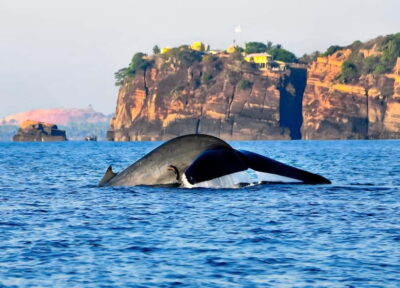
All Inclusive Mirissa Whale and Dolphin Watching Boat Ride
Read our review →Browse the lists this tour appears in