
Reviewed · COOKING CLASSES
Cooking Classes in Sri Lanka
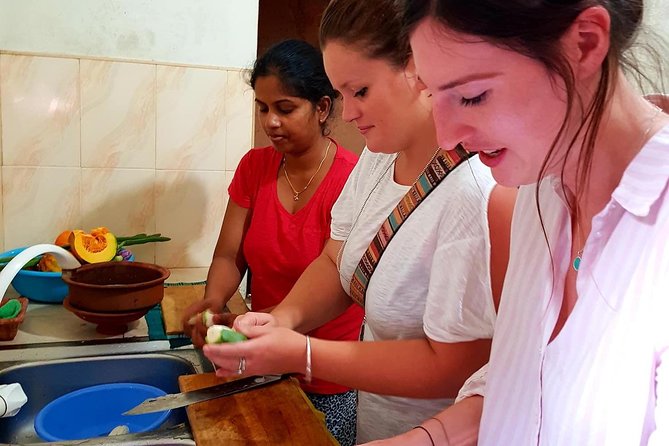
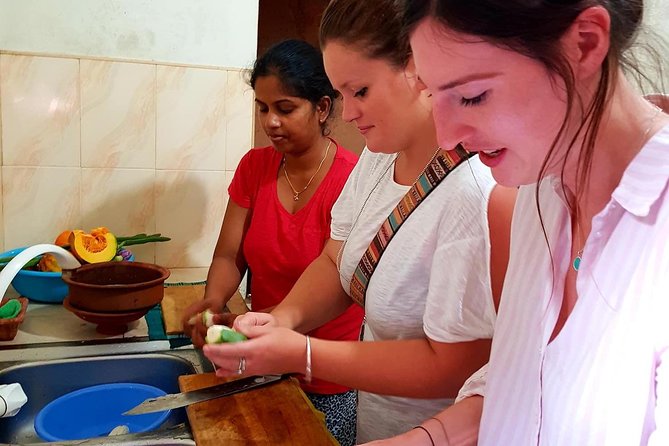
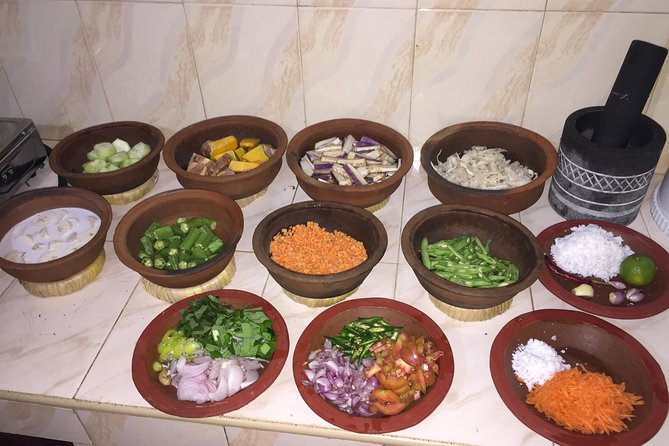
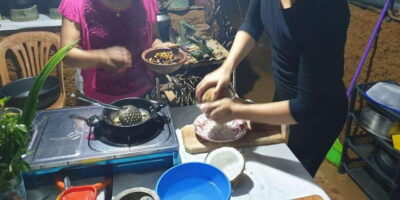
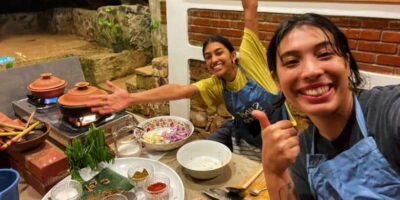
The best part of this Negombo experience is that you cook in a family home, not a polished demonstration kitchen. You make coconut milk, choose your vegetables, chop them yourself, season the curry, and then sit down to eat what you prepared. The hands-on format and small private setting make this a good way to understand Sri Lankan food beyond a restaurant menu.
I like that the class works for both vegetarian and non-vegetarian eaters, and that you learn by watching and doing rather than following a stack of recipes. The fresh coconut sambal and dhal are especially appealing starting points. The main consideration is location: the meeting point is in Andiambalama, Katunayake, near Negombo, so you should check your route before booking.
Key points to know before booking
- Private family-home setting: Only your group takes part, giving you direct time with the host.
- Three hours of cooking and dinner: The class includes preparation, cooking, eating, and a traditional dessert.
- Learn the coconut-milk method: You are shown how coconut milk is made before using it in the meal.
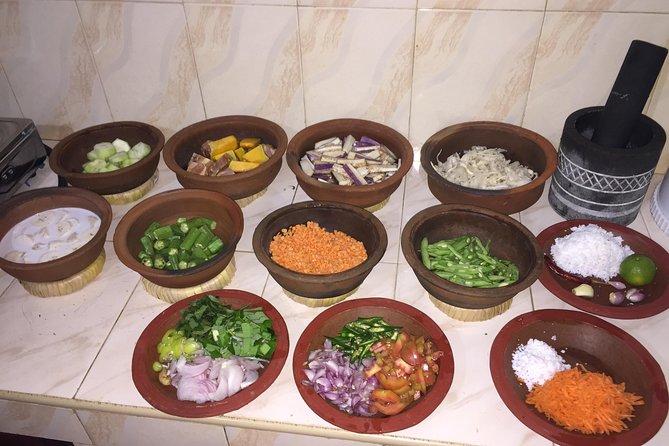
- Choose your vegetables: You pick the vegetables for your curry, then cut and chop them yourself.
- Optional market visit: Upgrade if you want to help select ingredients and learn about local spices and herbs.
- Good value at $45 per person: The price covers a private lesson and the meal you cook and eat.
Cooking in a Sri Lankan family home near Negombo
Sri Lankan food is often presented as a finished plate, with rice, several curries, sambal, dhal, and vegetables arranged around it. This class lets you see the work behind that plate. You are not simply handed a recipe and told to reproduce it. Instead, you learn the basic steps by working alongside a local host.
That difference matters. Home cooking depends on judgment: how much coconut milk to use, how vegetables are cut, when spices are added, and how long a curry needs to cook. You may not leave with exact measurements for every dish, but you should leave with a better sense of how Sri Lankan cooks build flavor.
The setting also gives the class a personal feel. You arrive at a family home and begin with tea or coffee as a welcome drink. From there, you move into the cooking process, with your host explaining the ingredients and methods as you work.
Because this is a private activity, the pace can suit your group better than a large class. You can ask questions, take your time chopping, or spend longer on a technique that interests you. The tradeoff is that the experience may feel less polished than a professional culinary school. That is part of its appeal, but it is worth knowing if you want a formal lesson with printed recipes and exact timing.
More Cooking Classes in Negombo:
- Cooking Class and Market Visit in Negombo
★ 5.0 · 4 reviews - Ella: Traditional Sri Lankan Cooking Class
★ 4.9 · 788 reviews - Organic cooking class sigiriya (kumara & family)
★ 5.0 · 650 reviews
The welcome drink sets an easy pace
The class begins with tea or coffee. This is a small detail, but it helps the visit feel like an invitation into someone’s home rather than a quick activity built around a clock.
Use this first moment to explain what you eat and what you avoid. The class is suitable for vegetarian and non-vegetarian diners, and you can choose which vegetables to use for your curry. If you have a strong preference, say so early, before the ingredients are prepared.
The experience is described as suitable for both non-vegetarians and vegetarians, but the specific meat or seafood options are not stated. If you want a non-vegetarian dish, ask what can be prepared before you book or at the start of the class.
Making coconut milk from the beginning
One of the most useful parts of the lesson is the introduction to coconut milk. Coconut milk is central to many Sri Lankan dishes, and learning how it is made gives you a better idea of why local curries taste different from versions made with packaged cream or a jarred sauce.
The class includes an explanation of the process before you use the coconut milk in cooking. That makes the ingredient less mysterious. You see it as part of the dish, not just something poured from a carton.
This is also a practical skill to take home. You may not recreate every part of the class in your own kitchen, but you can understand the role of coconut milk and use that knowledge when cooking Sri Lankan dishes later.
The available information does not specify the equipment or exact method used, so do not expect a full technical lesson in coconut processing. The focus is on preparing a meal together, with coconut milk as one important building block.
Choosing vegetables and preparing the curry
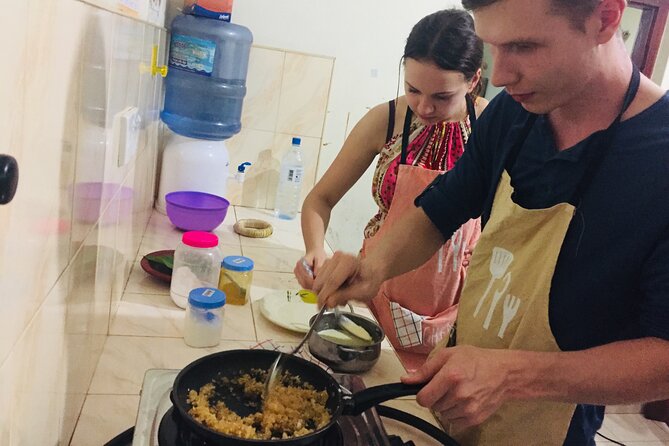
After the coconut-milk lesson, you choose the vegetables for your curry. This gives you a direct role in the meal and allows the dish to fit your tastes better than a fixed menu would.
You then cut and chop the vegetables yourself. That sounds simple, but it is one of the reasons the class feels practical. You are involved in the ordinary work of home cooking instead of watching someone else do everything.
Your host also introduces Sri Lankan spices and herbs. The class does not promise a complete spice course, but it gives you a chance to handle and discuss the seasonings used in the meal. For anyone who has eaten Sri Lankan food but struggled to identify the flavors, this part can make the cuisine easier to understand.
The cooking stage follows. You learn how to cook the vegetables and combine them with the spices and coconut milk. Since the class is not built around strict recipes, pay attention to texture and aroma as well as quantities. Ask questions about how your host knows when the curry is ready.
A possible drawback is that recipe-free instruction may be less useful if you want to reproduce every dish exactly at home. Some cooks love this flexible method. Others prefer written measurements. Bring a phone or notebook if you want to record the ingredients and steps, but the experience itself is centered on learning directly from the host.
A few more Negombo days worth a look
- 8 Days tour in Sri Lanka with privet driver and accommodations
★ 5.0 · 472 reviews - Private Car & Driver for 07 Days Tour In Sri Lanka
★ 5.0 · 199 reviews - Sri Lanka Private Tour 8 days-Driver/vehicle/accommodation H/B
★ 5.0 · 161 reviews - Most Popular Round Tour in Sri Lanka
★ 5.0 · 161 reviews
Rice, curry, sambal, dhal, and a traditional dessert
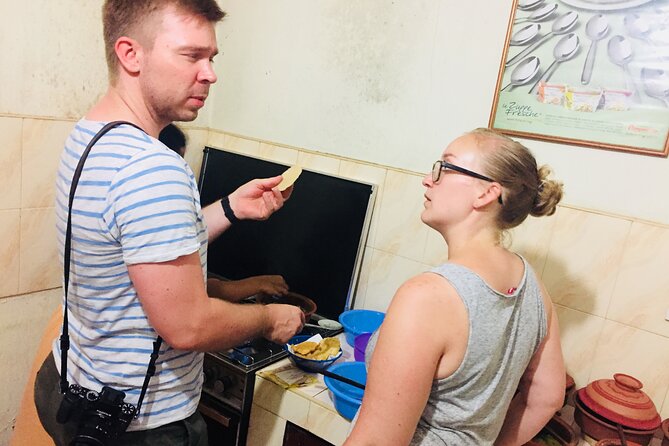
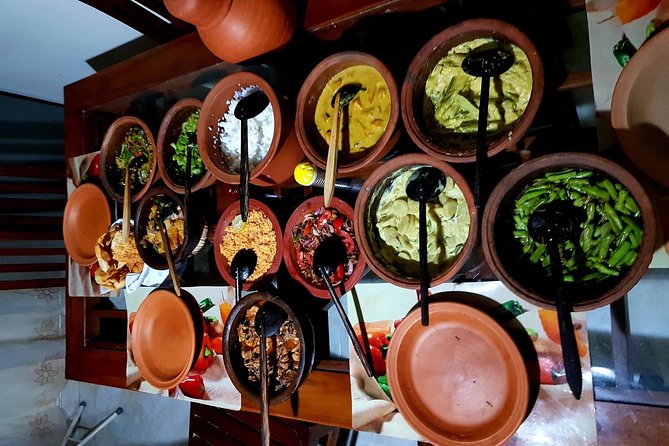
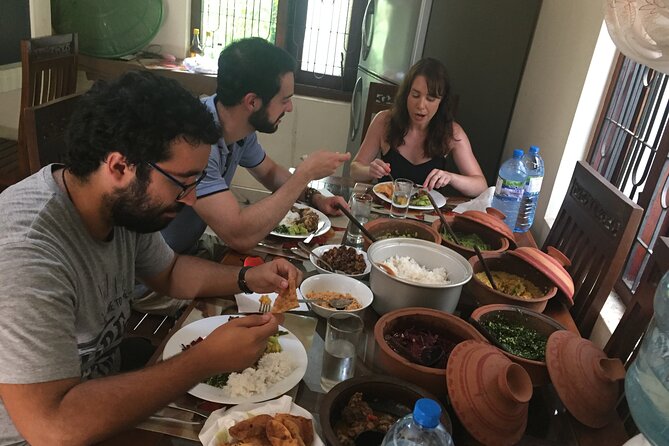
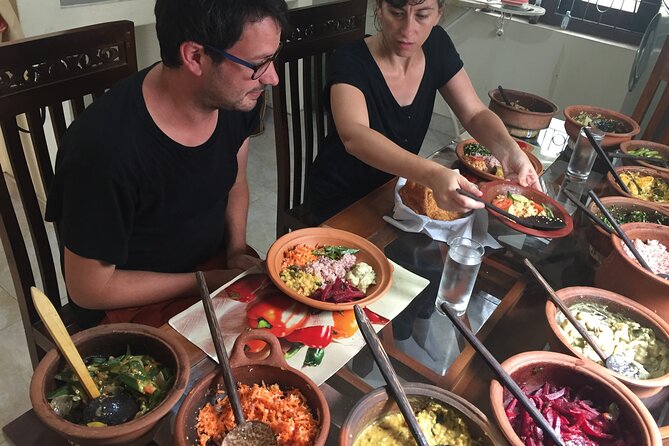
The meal includes more than a single curry. You can expect to work with rice, coconut milk, vegetables, spices, and other elements of a Sri Lankan home meal. Fresh coconut sambal and dhal are specifically associated with the class experience, and both are good examples of dishes that show how simple ingredients can carry plenty of flavor.
Dhal gives you a look at the softer, comforting side of Sri Lankan food. Coconut sambal brings a fresh, coconut-based contrast. Together with curry and rice, they create a meal with different textures and levels of seasoning.
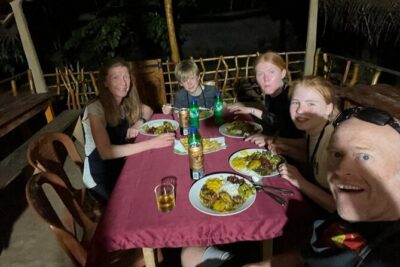
The cooking is followed by dinner at the family home. You eat the food you prepared, which gives the class a satisfying finish. Instead of leaving with a small sample or a demonstration plate, you get a full meal connected to the work you just completed.
A traditional dessert is also included. The specific dessert is not named, so it is best to treat this as a pleasant part of the meal rather than booking for one particular sweet.
Why the private format matters
Private tours can cost more than a shared class, but here the $45 price has a clear use. You are paying for about three hours, direct instruction, ingredient preparation, and dinner in a family home. The private format means your group is the only group taking part.
That can be valuable if you want to ask frequent questions or if members of your group have different food preferences. It also avoids the common problem of standing behind several people while one person handles the cooking.
The price is reasonable for a private activity that includes a meal, especially if you are already staying in or near Negombo and do not need a separate long transfer. It is less of a bargain if you are judging it only as a meal, since cheaper Sri Lankan food is easy to find. The value comes from learning how the meal is prepared and sharing that meal in a local home.
The experience is booked, on average, 36 days ahead. That suggests you should reserve early if the class is important to your schedule. At the same time, a booking made with less than 24 hours’ notice has been accepted, so last-minute availability may sometimes exist. Do not rely on that during a busy period.
Adding the market visit
You can upgrade the experience to include a market visit. This gives you a chance to choose vegetables before cooking and hear about local spices and herbs in the place where ingredients are bought.
The market option makes sense if you are curious about shopping as well as cooking. You get more context for the ingredients, and choosing the vegetables can make the final curry feel even more personal.
The details provided do not state the extra cost, length, or exact market location. Check those points before selecting the upgrade. If your schedule is tight, the basic cooking class may be the better choice. If you want a fuller food experience and have room in your morning or afternoon, the market addition should add useful context.
Timing, location, and meeting details
The activity lasts about three hours. That is long enough for a welcome drink, ingredient preparation, cooking, dinner, and dessert without turning the class into an all-day commitment.
The meeting point is listed as Negombo Cooking Class, Andiambalama, Katunayake, Negombo 11450, Sri Lanka. The activity ends back at the meeting point. Because the address is in the Andiambalama area, confirm how you will reach it from your accommodation before the day begins.
The location is near public transportation, which helps, but no pickup service is listed. Do not assume transportation from your hotel is included. A mobile ticket is provided, and booking confirmation is received at the time of booking.
The activity requires good weather. If poor weather causes cancellation, you can choose another date or receive a full refund. The minimum number of participants also has to be met. If the provider cancels for that reason, you can select another date or experience, or receive a full refund.
You can cancel for a full refund up to 24 hours before the start time. Changes and cancellations made inside that 24-hour window are not accepted for a refund, with cut-off times based on local time.
Who will enjoy this class most
I would choose this experience if you want food to be part of your understanding of Sri Lanka, not just something you order between sightseeing stops. It suits couples, families, and small groups who enjoy doing things together.
It is also a good pick for vegetarians because the vegetables are selected as part of the class. Non-vegetarians can take part as well, although the exact meat or seafood menu is not specified. Ask in advance if that detail matters to you.
You will probably enjoy it less if you want a formal school-style lesson, printed recipes, or advanced culinary training. This is home cooking. The focus is on seeing, chopping, tasting, and learning through conversation.
The class works particularly well near the beginning of a Sri Lankan trip. Early in your visit, you can use the lesson to understand dishes you will see elsewhere. You may recognize coconut milk, dhal, sambal, and spice combinations on later menus.
My booking advice
Book this Negombo cooking class if you value a private, hands-on meal more than a polished culinary performance. At $45 per person, the combination of family-home access, cooking instruction, dinner, and dessert offers solid value.
Choose the market upgrade if selecting ingredients and learning about local produce sounds as appealing as cooking. Skip it if you mainly want the three-hour kitchen experience or need to keep the schedule simple.
Before paying, confirm the exact meeting route and ask about any non-vegetarian dish you want. If you are comfortable learning without fixed recipes, this is a warm and practical way to connect Sri Lankan food with everyday home life.
FAQ
Where does the cooking class take place?
The class takes place at Negombo Cooking Class, Andiambalama, Katunayake, Negombo 11450, Sri Lanka.
How long does the experience last?
The cooking class and dinner last about three hours.
How much does the experience cost?
The listed price is $45 per person.
Is this a private activity?
Yes. Only your group takes part in the activity.
What happens when I arrive?
You receive tea or coffee as a welcome drink before the cooking begins.
What will I learn to prepare?
You learn how to make coconut milk, prepare a vegetable curry, cook rice, work with Sri Lankan spices and herbs, and prepare other parts of the meal. A traditional dessert is also included.
Can vegetarians take part?
Yes. The experience is suitable for vegetarian and non-vegetarian diners, and you can choose which vegetables to use for your curry.
Is a market visit included?
A market visit is available as an optional upgrade. It lets you choose vegetables and learn about local spices and herbs.
Can I cancel for a refund?
Yes. You can cancel at least 24 hours before the start time for a full refund. Cancellations or changes made less than 24 hours before the start time are not refunded.
Newly listed around Negombo
- Wonderful Srilankan 14 Days Tours★ 5.0 · 6 reviews
- 9 Days Guided Tour Through Sri Lanka★ 5.0 · 4 reviews
- Tailor-made Multi-day Private Tour Packages in Sri Lanka★ 5.0 · 19 reviews
- The Most popular Personalized round Tour In Sri Lanka-Day Charged★ 5.0 · 6 reviews
- Throughout the Pearl Island in 14 Days★ 5.0 · 22 reviews
- Multi Day Private Tour Around Sri Lanka with our Personal Driver★ 5.0 · 12 reviews
- Private Tour Experiences Across Sri Lanka★ 5.0 · 4 reviews
- 08 Days private round trip in Sri Lanka★ 4.5 · 3 reviews
Cooking Classes, compared.
Organic cooking class sigiriya (kumara & family)
Read our review →
Sri Lankan Cooking Class with Neranji at Homestay
Read our review →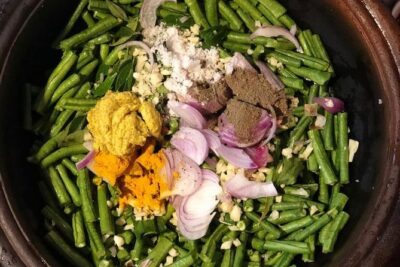
Browse the lists this tour appears in