
Reviewed · COOKING CLASSES
Cooking Class Sri Lanka with Locals
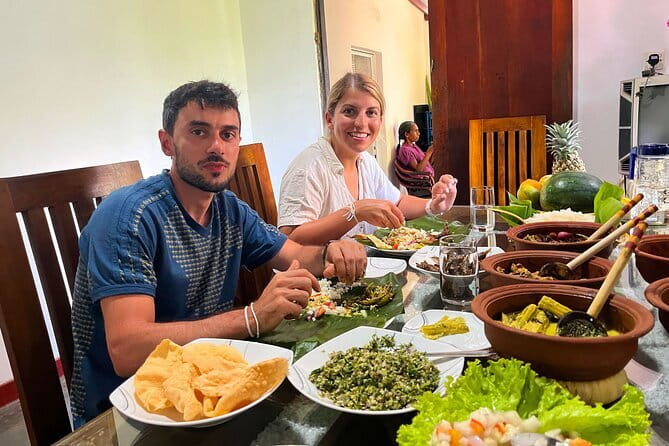
Sri Lankan cooking starts at the market, not the stove. With Anu and Danuka, you visit a local market, choose fresh produce, sample fruit, and then carry those ingredients into their family home for a hands-on meal. I like the market-to-table format and the chance to learn why coconut plays such a central role in the food. I also like that this is a private activity, so your group gets direct attention rather than being folded into a large class.
The main consideration is simple: pickup is included, but drop-off is not. You will need to arrange a taxi, Uber, or PickMe afterward. The timing is flexible, which helps, but you should confirm the start time that fits your Colombo plans before booking.
Key Points at a Glance

- A real Colombo home: Anu and Danuka welcome you into their family home for the cooking session.
- Market shopping comes first: Choose produce with your hosts and sample local fruit before cooking.
- Coconut takes center stage: Learn why coconut is described as the lifeblood of Sri Lankan cuisine.
- Private attention: Only your group participates, making questions and hands-on instruction easier.
- Meal included: The experience includes lunch or dinner, depending on the time you choose.
- Four hours with pickup: Allow about half a day, with an air-conditioned vehicle taking you to the activity.
Why This Colombo Cooking Class Feels Different

Many cooking classes begin with ingredients already measured and waiting on a counter. This one begins before the kitchen. You meet your hosts, visit a local market, and help select the food that will become your meal.
That first stop gives the class a useful sense of place. You are not only learning a recipe. You are seeing where everyday ingredients come from and how local shoppers judge produce. The market visit also gives you a chance to taste some of Sri Lanka’s local fruit, an easy way to make the food lesson feel connected to daily life.
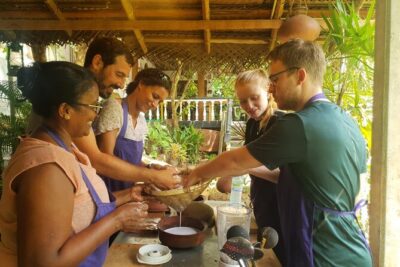
The activity then moves to Danuka’s family home, where Anu and Danuka guide the cooking. The setting matters. A private home gives the experience a personal scale, and you can ask about ingredients, preparation, and food traditions as you work.
The hosts describe the home as clean and hygienic. That will matter to you if you want a local setting but still prefer a tidy, comfortable place to cook. This is not presented as a restaurant kitchen or a formal culinary school. Its appeal is the family welcome and the chance to see how food is prepared in a home environment.
More Cooking Classes in Colombo
- Colombo Cooking Class
★ 5.0 · 151 reviews - Market Tour and Hands-On Cooking Class Colombo
★ 5.0 · 140 reviews - Colombo Cooking Experiance with Explore Market
★ 4.7 · 33 reviews
Starting at the Local Market
The market visit is the first practical lesson. You will help handpick fresh ingredients rather than simply receive a prepared basket. That small difference makes the experience more useful because you begin to understand selection, not just cooking.
You can expect to see produce chosen for the meal and sample local fruit during the visit. The exact items are not fixed in the available details, so do not book expecting a particular dish or a set list of vegetables. The menu is described as diverse and flexible, with inclusive options available, but you should discuss dietary needs when arranging the experience.
The market can also be the liveliest part of the morning or afternoon. If you like ordinary local scenes, this is a strong feature. If you prefer a quiet, polished food tour, the market may feel less controlled. That is part of the tradeoff: you gain a more everyday experience, but you do not get the predictability of a cooking studio.
I especially like that the market visit is tied directly to the meal. You are not looking at ingredients as a sightseeing stop with no follow-through. You select food, learn about it, and then use it in the home kitchen.
Learning the Role of Coconut and Spice
Sri Lankan cuisine is often reduced to the word curry, but this class gives you a chance to look more closely at what creates its flavor. One of the clearest lessons is the importance of coconut. The hosts explain coconut as the lifeblood of Sri Lankan cuisine, and that idea helps you understand why it appears in so many forms and preparations.
You also learn about local spices and the way they shape traditional food. The cooking uses natural, local spices and avoids artificial additives, according to the hosts. That does not mean the food will be mild or simple. Sri Lankan cooking can have layered seasoning, and the point here is to see how those flavors are built in a home kitchen.
A useful lesson from the cooking is that less can sometimes be more. The focus is not on adding every possible seasoning. Instead, the class connects fresh produce, coconut, spices, and traditional methods. You may leave with a better sense of how a few well-chosen ingredients can carry a dish.
Because this is a hands-on class, you should expect to take part rather than watch a demonstration from a distance. The available information does not specify every cooking task or dish, so the precise work will depend on the menu and the timing you select. Ask about the planned menu if a particular dish matters to you.
Cooking in Anu and Danuka’s Family Home

The move from the market to the family home is the heart of the experience. Anu and Danuka personally guide the session, and Danuka’s mother is also described as part of the welcome. That family involvement gives the class a warm, informal character.
You will cook in a real local home, not a staged attraction. That can make the meal feel more personal. You can connect the food to family habits, local ingredients, and the way cooking fits into ordinary life.
The home setting also means you should adjust your expectations. This is not a professional kitchen designed for a large class, and it is not sold as a formal chef-training course. You are choosing it for contact with local hosts, direct instruction, and a meal prepared together.
The private format works well here. Only your group participates, so you do not have to compete with a crowd for the instructor’s attention. If you are shy about asking basic questions, a private class can feel easier. If you are traveling alone, it also gives you more direct contact with Anu and Danuka, though the supplied information does not state whether solo bookings have a different price.
Same base, a completely different kind of day out:
- Colombo: Private Tuk-Tuk City Tour with All Entry Fees
★ 4.9 · 2,154 reviews - From Colombo: Sigiriya and Dambulla Day Trip with Safari
★ 4.7 · 842 reviews - Sri Lanka Personal Tour Driver in private vehicle
★ 5.0 · 747 reviews - Colombo Tuk Tuk City Tour -Sightseeing Entry Fees & Food Included
★ 5.0 · 678 reviews
Lunch or Dinner After the Cooking

Food is included as part of the experience, with lunch or dinner depending on the time you choose. This is more than a quick tasting. The meal gives you a reason to sit down and enjoy the results of the work in the same family setting.
I would allow the full four hours rather than treating this as a short cooking demonstration. The listed duration is approximate, and the experience includes transportation, market shopping, cooking, and the meal. Give yourself room afterward, especially if you have a flight, train, or timed attraction.
The flexible timing is helpful. You can select a preferred time for the activity, which makes it easier to fit into a Colombo visit. Still, flexibility does not mean you should leave arrangements until the last minute. Choose a time that leaves breathing room on both sides, since the class has several parts and the duration is approximate.
The meal is also where the cultural exchange becomes most complete. You have seen the ingredients, worked with the hosts, and can now taste the final result. For me, that full sequence offers better value than a simple restaurant meal because it gives you context as well as food.
What the $40 Price Gets You

At $40 per person, this is priced as a half-day food and culture activity rather than just a meal. The price includes the cooking experience, market visit, lunch or dinner, and pickup in an air-conditioned vehicle.
That is a fair package if you value personal instruction and a private group. A cheaper meal would not give you the same time with local hosts, while a formal cooking school may charge more for a structured lesson in a commercial kitchen. The value here rests on the family setting and the market-to-table format.
Group discounts may improve the deal for families or friends traveling together. Since the activity is private, a small group can share the experience without adding unrelated people. Check the final price for your party before confirming, since the available information does not give the discount amount.
The price does not include drop-off. That is the main extra cost to plan for. You can use a taxi, Uber, or PickMe from the location, and the hosts are willing to help arrange transport. I would still keep a little extra time and money available for the ride back.
Who Will Enjoy This Most

This class suits you if food is one of the main ways you like to understand a place. You do not need to be an experienced cook. The value is in learning directly from the hosts and taking part in the process.
It is especially suitable for:
- Couples or families who want a private activity
- Small groups looking for a shared meal and hands-on experience
- Food lovers interested in coconut, local spices, and fresh produce
- First-time visitors who want a direct introduction to Sri Lankan cuisine
- Anyone who prefers a family home to a formal cooking school
The class may be less suitable if you want a fixed menu, a short activity, or a central restaurant setting. The market and home format is more personal, but it is also less standardized than a studio class.
You should also raise dietary restrictions before the activity. Inclusive options are mentioned, but the specific options are not listed. Early notice gives the hosts a better chance to plan a suitable menu.
Pickup, Timing, and the Practical Details

Pickup is included in an air-conditioned vehicle, which is useful in Colombo’s heat and makes the start of the activity easier. The location is near public transportation, so you have another way to reach the area if needed.
Drop-off is not included. After the meal, you can arrange a taxi, Uber, or PickMe, or ask the hosts to help. This is not a serious problem, but it is one detail that can slip your mind when planning the day.
You receive booking confirmation at the time of reservation. The experience is offered as a private activity, and mobile tickets are accepted. Group discounts are available, though the amount is not specified.
Free cancellation is available if you cancel at least 24 hours before the local start time. Changes or cancellations made within 24 hours are not refunded or accepted. The activity also depends on good weather, and a weather cancellation brings the choice of another date or a full refund.
Is This Cooking Class Worth Booking?
I would book this if you want more than a prepared Sri Lankan meal. The best parts are the local market, the family home, the direct help from Anu and Danuka, and the explanation of how coconut and natural spices shape the food.
The $40 price makes sense for a four-hour private experience that includes pickup and a meal. Just remember that drop-off is your responsibility, the menu is not fully specified, and the activity works best when you are open to a flexible home setting rather than a tightly timed professional class.
Choose it for personal contact, practical cooking, and a taste of everyday Colombo food culture. Skip it if you need a fixed itinerary or a quick, polished demonstration.
FAQ
How long does the cooking class last?
The experience lasts approximately four hours.
Where does the activity take place?
The activity takes place in Colombo. You visit a local market and then continue to the hosts’ family home for the cooking session.
Who leads the cooking class?
Anu and Danuka guide the experience, with Danuka’s mother also involved in welcoming you into the home.
Is transportation included?
Pickup is included in an air-conditioned vehicle. Drop-off is not included, but you can use a taxi, Uber, or PickMe, and the hosts can help arrange a ride.
Is this a private activity?
Yes. Only your group participates.
Are lunch or dinner included?
Yes. The experience includes lunch or dinner, depending on the time you choose.
Can I choose the activity time?
Yes. You can select your preferred timing for the activity.
What is the cancellation policy?
You can cancel at least 24 hours before the local start time for a full refund. Cancellations or changes made less than 24 hours before the start time are not accepted or refunded. If poor weather causes a cancellation, you can choose another date or receive a full refund.
Newly listed around Colombo
- Transfer between Colombo (CMB) Airport and Galle Face Hotel★ 5.0 · 4 reviews
- Colombo Airport (BIA) to Galle Private Airport Transfer★ 5.0 · 3 reviews
- Sri Lanka Private Transfer from Colombo Airport to Anywhere★ 5.0 · 6 reviews
- Sri Lanka Private Tour Pick Up & Drop Off – Colombo Intl Airport★ 5.0 · 10 reviews
- Private transfer from Colombo Airport to Bentota Hikkaduwa Galle★ 5.0 · 6 reviews
- Colombo Airport (CMB) to Colombo City Private Transfer★ 4.5 · 26 reviews
- Colombo (CMB) Airport to Negombo City Private Transfer★ 5.0 · 13 reviews
- Colombo (CMB) Airport to Kandy City Private Transfer★ 5.0 · 6 reviews
Cooking Classes, compared.
Organic cooking class sigiriya (kumara & family)
Read our review →
Sri Lankan Cooking Class with Neranji at Homestay
Read our review →
Browse the lists this tour appears in