
Reviewed · COOKING CLASSES
Ella: Sri Lankan Authentic Cooking expirience
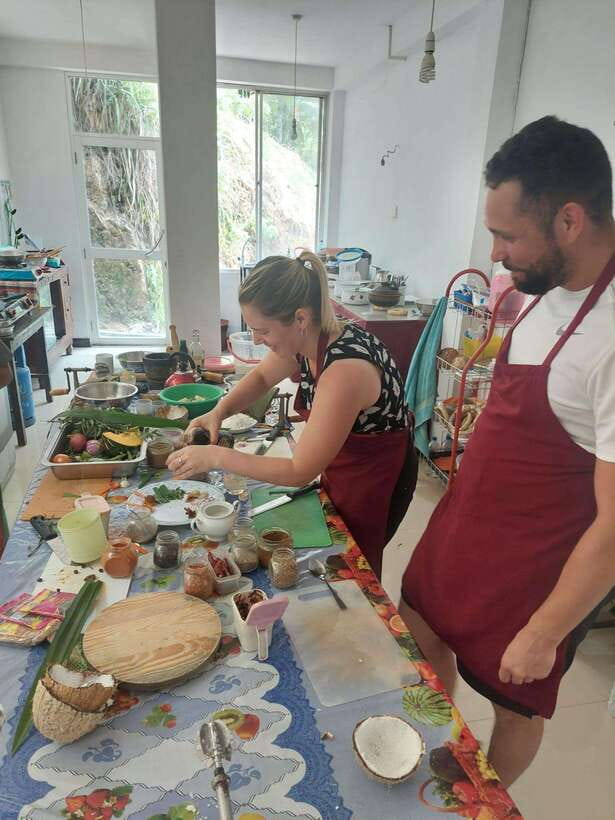
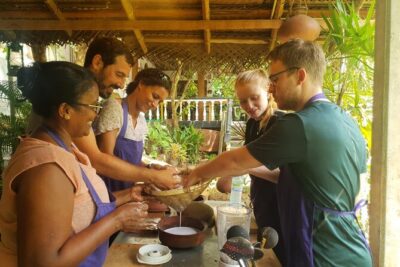
The best part of this Ella experience is that you do not just watch a curry being made. You help turn a whole coconut into fresh milk and sambal, season several curries, shape coconut roti, and then eat the food you prepared in a traditional Sri Lankan home. Ruwini leads the class in English and keeps the work moving.
I like the hands-on cooking and the generous range of dishes. You make rice, dhal curry, pumpkin curry, beans curry, aubergine modju, coconut sambal, coconut roti, and papadam. I also like that Ruwini explains substitute ingredients for cooks back home, a small but useful touch.
The main consideration is the pace. Two hours is short for such a large menu, especially in a group of up to 10. You will take part, but you may not handle every dish from start to finish. Transportation is not included, so you must arrange your own way to the home.
Key points at a glance

- A full Sri Lankan meal: Cook rice, four curries, coconut sambal, coconut roti, and papadam before sitting down to eat.
- Coconut from the shell onward: Crack and scrape coconuts, then use the fresh coconut to make milk and sambal.
- Ruwini teaches in English: She explains spices, cooking methods, and practical ingredient swaps for home kitchens.
- Small-group format: Up to 10 people can join, with private sessions available if requested.
- Strong vegetarian choice: The listed meal is centered on vegetables, lentils, coconut, rice, and spices.
- Good value at $22: You receive a two-hour class, ingredients, equipment, a cooked meal, tea on request, and recipes by email.
What makes this Ella cooking class worthwhile

Sri Lankan food is often reduced to the words rice and curry. That description is accurate, but it hides the fun. A Sri Lankan meal is usually a collection of separate dishes, each with its own texture, spice mix, and cooking method. This class lets you see how those pieces work together.
You will cook several curries rather than one main dish. Dhal brings a soft, creamy base. Pumpkin adds sweetness. Beans provide a firmer bite. Aubergine modju brings a darker, richer flavor. Coconut sambal adds freshness and heat, while coconut roti gives you something warm and chewy to eat with the curries.
That variety is the real lesson. You are not only following a recipe. You are learning how Sri Lankan cooks build a meal with contrast. One dish can be mild and creamy, another sweet, another sharp or spicy. By the time you sit down, you have a better sense of why a plate of rice and curry never tastes like one single dish.
The setting matters, too. This is held in a traditional home rather than a formal restaurant kitchen. That gives the class a personal scale. You are learning in the place where home cooking makes sense, with ingredients and methods presented as part of daily food culture rather than as a staged show.
More Cooking Classes in Ella
- Ella: Traditional Sri Lankan Cooking Class
★ 4.9 · 788 reviews - Ella: Sri Lankan Cooking Class with Neranji at Homestay
★ 5.0 · 276 reviews - Ella : Cooking class with amazing Spice Garden Tour
★ 5.0 · 239 reviews
Meeting Ruwini and getting started
Ruwini is the English-speaking host and cooking teacher. The class begins with a short introduction to Sri Lankan spices, which is a useful start before the chopping and stirring begin.
You can expect her to explain how spices shape the different dishes, not simply hand you a fixed list of steps. Several people who took the class found her warm, patient, humorous, and good at keeping everyone involved. One especially useful feature is her advice on substitutions. If a Sri Lankan ingredient is hard to find at home, she can suggest another option.
That makes the class more useful after your holiday. Plenty of cooking classes are enjoyable for two hours and then difficult to repeat. Here, the recipes and substitution advice give you a fair chance of making the food again. The recipes are sent by email after the class.
The class is conducted in English. If you enjoy asking questions, this is a good chance to ask about spice levels, vegetables, coconut milk, and how to adjust the recipes for ingredients available in your own country.
Cracking coconuts and making the base ingredients

The coconut work is one of the most distinctive parts of the activity. You are not simply handed a carton of coconut milk. You take part in cracking coconuts, scraping the flesh, and preparing fresh coconut milk.
That task can be more interesting than it sounds. Coconut appears in several forms across the meal, and seeing the process helps explain the soft texture and gentle sweetness in many Sri Lankan curries. You also make coconut sambal, which gives you another way to use the same ingredient.
This is the kind of detail I value in a cooking class. It connects the finished food to the work behind it. You understand that coconut milk is not just a packaged liquid added at the end. It is part of the preparation and changes how the dish comes together.
The practical drawback is that coconut preparation takes time. With a large menu and a two-hour schedule, the class has to keep moving. If the group is full, you should expect to share tasks rather than handle every step yourself. That is not a flaw, but it is worth knowing if you want a long, slow lesson focused on one or two recipes.
Cooking the curries as a team

The main cooking section covers a striking amount of food. The planned meal includes dhal curry, pumpkin curry, beans curry, aubergine modju, rice, coconut sambal, coconut roti, and papadam.
The curries are especially useful for learning because each one brings a different flavor profile. Dhal curry gives you a classic lentil dish. Pumpkin shows how a vegetable can work with spice while keeping a sweet note. Beans curry offers a lighter vegetable option. Aubergine modju has drawn particular praise from people who enjoyed its stronger, fuller flavor.
The recipes also show how a vegetarian Sri Lankan meal can feel complete. You are not left with one vegetable dish and a bowl of rice. You build a plate with several curries, different textures, and plenty of coconut. Vegetarians should find this class particularly appealing, though anyone with allergies or dietary restrictions should tell the host in advance.
In a group of up to 10, the cooking becomes a shared task. One person may help with vegetables, another may work on coconut, and others may stir, season, or prepare the roti. The class works best if you are happy to participate rather than stand back and watch.
That hands-on approach is also why the activity has earned such strong praise. People have described it as fun, accessible, and easy to follow. The food is not presented as something too difficult for a home cook. You get to see how several dishes can be made with familiar methods once the ingredients and spice combinations are clear.
Same base, a completely different kind of day out:
- Ella: Drop to Tangalle/Hiriketiya/Mirissa/Galle & Yala Tour
★ 4.9 · 518 reviews - Ella: Little Adam’s Peak, Nine Arches Bridge & Waterfalls
★ 4.9 · 402 reviews - ELLA: Drop to Tangalle/Hiriketiya/Mirissa/Galle & Yala Tour
★ 4.1 · 336 reviews - From Ella: Drop to Tangalle/Hiriketiya/Mirissa & Yala Safari
★ 4.8 · 296 reviews
Making coconut roti, rice, and papadam

Coconut roti adds a different kind of cooking to the session. You prepare a dough containing coconut, shape it, and cook it as part of the meal. It is a simple dish, but it gives you a useful contrast to the softer curries and rice.
Rice is the anchor of the meal. In Sri Lanka, the rice is not an afterthought. It is the base that carries the curries, sambal, and papadam. Cooking it as part of the full meal helps you understand the balance of the plate.
Papadam supplies crisp texture. It is a small element, but it makes the finished spread feel more complete. With soft dhal, tender vegetables, coconut sambal, roti, and rice all together, the meal has plenty of contrast without needing meat.
The class also makes room for traditional preparation rather than only the most polished restaurant techniques. You get involved with ingredients in a direct way. That can be messy, but it is part of the appeal. Bring a willingness to work with your hands and take part in the group process.
Sitting down to eat what you made
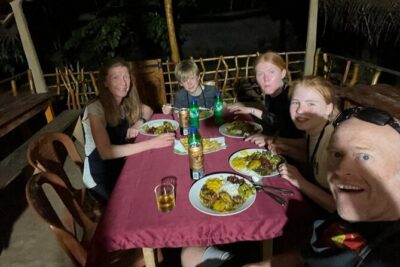
After the cooking, you sit down to eat the meal. This is not a token tasting of one small dish. The included food is the full set of rice, aubergine modju, beans curry, dhal curry, pumpkin curry, coconut sambal, coconut roti, and papadam.
The final meal is where the earlier steps make sense. You can compare the curries side by side, notice how the coconut changes the texture, and decide which dishes you want to repeat at home. It also gives the group a natural chance to share the food together.
The amount of food appears to be generous. Several people described the meal as a highlight of their time in Sri Lanka, with some calling it the best rice and curry they had eaten during their holiday. I would treat that as a sign of a well-liked meal rather than a guarantee of your personal taste, but the menu is certainly substantial for a two-hour activity.
Upcountry black tea is available on request. If tea matters to you, ask for it rather than assuming it will arrive automatically.
Group size, timing, and the feel of the class

The class lasts two hours and accepts up to 10 participants. That is small enough to feel personal, but large enough that the experience depends on how the tasks are shared.
A full group may give the class a social feel and make the teamwork more lively. The tradeoff is that you will not personally perform every task. In a smaller group, you may have a more active role in preparing each dish. Some sessions have been arranged for only two people, and private classes are available on request with time adjustments.
If you want the most personal version, ask about a private session before booking. If you enjoy meeting other people over a shared meal, the regular small-group format should suit you well.
Two hours is a sensible length for a holiday activity, especially if you have a busy schedule in Ella. It is long enough to cook and eat, but not so long that the class takes over your day. Still, the menu is ambitious. Expect an efficient class, not a slow culinary workshop with extended demonstrations.
Is $22 a fair price?

At $22 per person, the value is strong. The fee covers the instruction, all ingredients, cooking equipment, the complete meal, and recipes sent by email. Upcountry black tea is also available on request.
The price looks even better if you plan to use the recipes at home. You are not paying only for lunch. You are getting a short lesson in Sri Lankan spices, several recipes, practice with coconut preparation, and guidance on ingredient substitutions.
Transportation is not included, so add the cost and time of reaching the cooking class to your plans. The exact location details are not provided here beyond the Honey Bee Garden Cooking Class name and its Ella area setting, so confirm the meeting point when booking.
The value is less clear if you want a long, highly personalized session focused on a single dish. For that, a private class with time adjustments may be better. For a two-hour introduction with a full meal, the price is reasonable.
Who should book this experience?

I would recommend this class to you if you enjoy eating local food and want to understand how it is made. It suits couples, solo visitors, families, and small groups who are comfortable sharing kitchen tasks.
Vegetarians should find the menu especially appealing. The meal is built around lentils, vegetables, coconut, rice, roti, and papadam, though you should still notify the host about allergies or other restrictions before the class.
It also suits cooks who want recipes they can repeat at home. Ruwini’s advice on substitute ingredients adds practical value, especially if you live somewhere that does not stock every Sri Lankan ingredient.
I would think twice if you dislike group participation, cannot stand a busy cooking session, or expect to prepare every dish entirely on your own. The class is active and cooperative. That is its strength, but it also means you need to share the work.
Booking is flexible, with free cancellation up to 24 hours ahead and a reserve now, pay later option. The activity is wheelchair accessible, though you should confirm any personal access needs when arranging the booking.
Should you book the Honey Bee Garden cooking class?
Yes, if you want a practical introduction to Sri Lankan home cooking rather than a simple meal. The strongest reasons are the range of dishes, the coconut preparation, Ruwini’s clear English instruction, and the chance to eat everything you help cook.
The class is especially good value for vegetarians and for anyone who wants recipes that can be made again at home. Just remember that $22 does not include transport, and a full group means shared tasks. If those points suit you, Honey Bee Garden is a smart two-hour addition to an Ella itinerary.
FAQ
How long does the Sri Lankan cooking class last?
The class lasts two hours. Starting times depend on availability.
What dishes will I cook?
The planned meal includes rice, aubergine modju, beans curry, dhal curry, pumpkin curry, coconut sambal, coconut roti, and papadam.
Is the class taught in English?
Yes. Ruwini, the host and instructor, teaches the class in English.
Is transportation included?
No. Transportation to and from the cooking class location is not included.
Can I book a private session?
Yes. Private sessions are available on request, and the timing can be adjusted.
What should I do if I have an allergy or dietary restriction?
Tell the host about any allergies or dietary restrictions in advance. The activity information specifically asks participants to provide this information before the class.
Newly listed around Ella
- From Ella: Private Yala Safari & Transfer/Tangalle/Mirissa/Galla★ 5.0 · 12 reviews
- Waterfall Tour & nine arch bridge Ella★ 5.0 · 4 reviews
- 2 Day Tour of Yala & Ella with Hill Country Scenic Train Ride – All Inclusive★ 5.0 · 5 reviews
- 3 Days Private Tour of Yala Safari/ Ella/ Kandy – All Inclusive★ 5.0 · 4 reviews
- Ella Odyssey Train Reserved Seats Kandy to Ella★ 4.5 · 25 reviews
- Ella Private Day Tour From Kandy★ 4.5 · 15 reviews
- 3 Days Nature and Chill Tour of Ella, Nuwara Eliya and Haputale★ 5.0 · 10 reviews
- Sri Lanka Ella Private Day Tour Nine Arch & Elephant transit home★ 5.0 · 22 reviews
Cooking Classes, compared.
Organic cooking class sigiriya (kumara & family)
Read our review →
Sri Lankan Cooking Class with Neranji at Homestay
Read our review →
Browse the lists this tour appears in