
Reviewed · WORKSHOPS
Interactive Batik Workshop and Lessons in Sri Lanka
The best part of this Kandy experience is that you do not just watch batik being made. You sit down in a family home studio and work through the full process yourself, from choosing fabric to applying wax and dye. Anuja and Manugi are among the family members named in connection with the hands-on teaching, and the instruction is personal rather than rushed.
I like the small maximum of 10 people, which gives you room to ask questions and get help with tricky wax lines. I also like that you take home your own finished work, a much more meaningful souvenir than a shop-bought cloth. The main drawback is that batik is slow, careful work, so this is not the right choice if you want a quick craft demonstration or a polished result with no effort.
Key points about the Kandy batik workshop
- You make your own batik cloth or bag, rather than simply watching a demonstration.
- The three-and-a-half-hour session covers the full process, including fabric choice, waxing, dyeing, stamping, cracking, and de-waxing.
- Traditional tools are provided, including the funnel, tjanting, and Henry tool.
- A home studio creates an intimate setting, with an experienced batik-making couple guiding the session.
- The group is limited to 10 people, making personal help easier to get.
- The $28 price includes materials, equipment, taxes, and herbal tea, but not transport or lunch.
Starting with fabric, wax, and a blank design
The workshop begins at 8:00 a.m. on Thalapiyannawa Road in Kandy. You meet at the workshop address and finish there, so you need to arrange your own way to the starting point. Private transportation is not included, and lunch is not part of the package.
The early start works well for a craft session. You have the full morning ahead, and the three-and-a-half-hour length gives the instructor time to explain the stages properly. This is not a quick stop squeezed between major sights. Plan your morning around it.
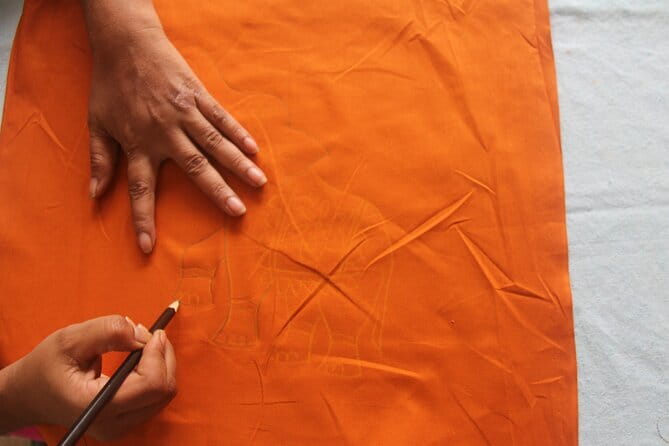
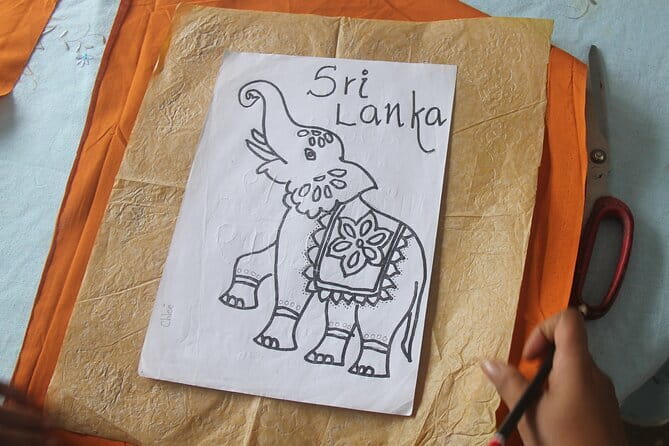
You begin by selecting fabric and thinking through a design. That first choice matters. Batik is built in layers, and the design must work with the way wax and dye interact. You will draw your pattern before moving into the more technical work, so you do not need to arrive with an artistic plan already prepared.
I would keep your first design reasonably simple. Fine lines and crowded patterns may look appealing, but they are harder to manage when you are learning how the tools behave. A clean shape, repeating pattern, or simple image gives you a better chance of finishing a piece you will be pleased to carry home.
More craft workshops around Kandy:
- Kandy: Interactive Batik Workshop
★ 5.0 · 51 reviews - Galle: Traditional Gems & Jewellery Workshop with Transfers
★ 4.9 · 539 reviews - Galle : Traditional Jewellery making workshop
★ 4.9 · 34 reviews
Learning traditional waxing tools by hand
Wax is the heart of batik. The instructor explains the wax mixtures and shows you how wax is applied to the fabric to block dye from reaching selected areas. This sounds simple, but controlling the flow takes care. Too much wax can spread beyond the line, while too little can leave gaps.
You get to try several traditional tools, including the funnel, tjanting, and Henry tool. The tjanting is used for controlled lines, while the other tools allow different marks and applications. Working with each one helps you see how a professional maker gets varied textures and line widths.
The workshop also covers wax spraying, stamping, and wax designing. These methods add pattern without requiring every mark to be drawn by hand. Stamping can help create repeated shapes, while spraying and other applications give the cloth a less regular look.
This is where the small group helps. You can ask the instructor to check your grip, the consistency of the wax, or the pressure you are using. A large demonstration group might leave you copying from a distance. Here, personal guidance is part of the experience.
Adding cracks, brushwork, and controlled imperfection
Batik is not meant to look perfectly uniform. The cracking technique creates fine lines where dye can enter, producing a distinctive network of color. You also learn brush arts, which allow you to paint and shade parts of the design instead of relying only on blocked areas.
I like this stage because it shows why handmade batik has character. The final look comes from several decisions: how the wax was placed, where it cracked, how the dye moved, and how the color was brushed on. You will not produce a factory-identical piece, and that is the point.
Still, the process can be fiddly. The reviews of the activity describe the work as enjoyable but demanding, and that is a fair expectation. You need patience while the wax is applied and the colors are built. If you are working with children, the session may suit older children better than very young ones, although the official information says most participants can take part.
Mixing dyes and watching the colors develop
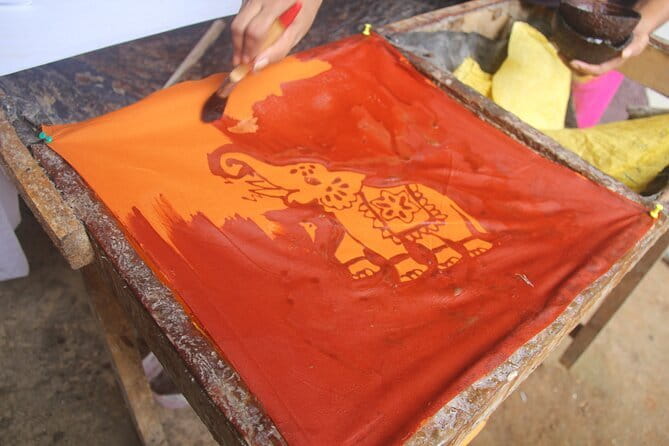
The dyeing section introduces several types of dye, including Naphthol dyes, Vat dyes, and Reactive dyes. You learn that different dyes require different methods, mixtures, and applications. The instructor explains how color is added while the wax protects selected parts of the cloth.
For you, the value is not just learning dye names. You begin to understand the logic of batik: wax reserves some areas, dye colors others, and repeated stages gradually build the final image. This makes the finished piece more satisfying because you know what each section required.
The sequence also demands attention. You need to follow instructions about dye mixtures and application techniques rather than rushing ahead. The instructor guides each participant and can step in when help is needed, which is useful if your cloth begins to look different from what you planned.
An herbal tea is included. The warm drink is a small touch, but it fits the setting. Some accounts of the session also describe generous family hospitality, including snacks or food, though the official inclusions specify herbal tea rather than a meal. I would treat lunch as your responsibility and avoid arriving hungry.
A few more Kandy days worth a look
- Kandy Private Guided City Tour by Tuk Tuk
★ 4.9 · 1,307 reviews - From Kandy: Sigiriya Rock & Dambulla Cave Temple Adventure
★ 4.9 · 785 reviews - Kandy Village Cooking Class
★ 5.0 · 536 reviews - Kandy to Ella Train Tickets – Reserved Seats
★ 4.5 · 523 reviews
Finishing the cloth through boiling and de-waxing
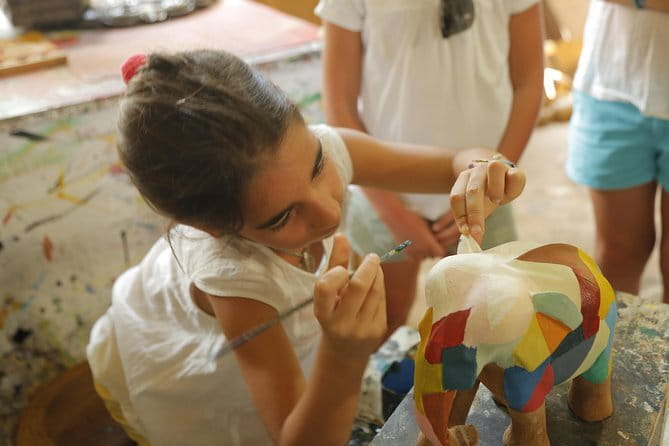
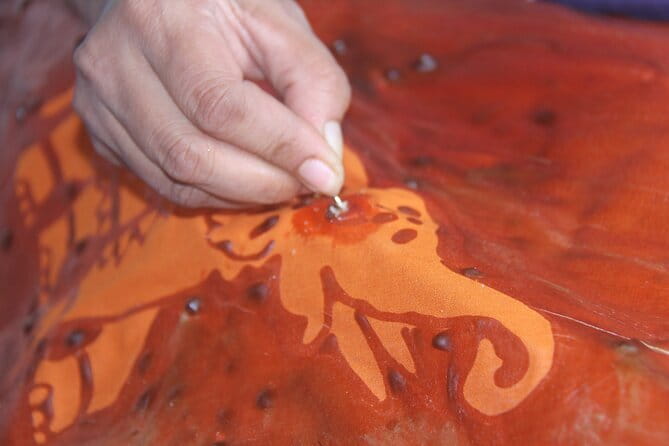
The final stages include wax burning and wax boiling, also called de-waxing. This removes the wax and reveals the protected areas beneath it. It is the moment when the pattern becomes clear and the separate steps finally come together.
The instructor handles the technical process with guidance, but you get to understand what is happening. De-waxing is more than cleanup. It reveals the contrast between dyed and protected sections, and it can change the appearance of your piece in a way that is hard to predict from the early drawing.
Depending on the piece you create, you may take home a batik cloth or a bag. The activity information says you create your own batik cloth, while one account describes making a bag. The exact finished item may depend on the design and materials used during your session, so ask at the beginning if you have a strong preference.
A home studio instead of a formal craft class
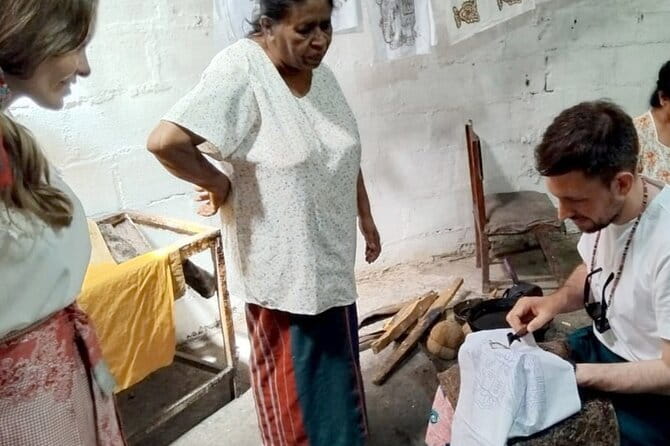
The workshop takes place in the home studio of an experienced batik-making couple who have worked in the field for decades. That setting is a major part of the experience. You are not only learning a technique, you are seeing the tools and working habits of people who make batik as an ongoing craft.
The atmosphere is described as cozy and family-oriented. Anuja is praised for patient, gentle instruction, and Manugi is named in connection with a warm family session. Because the teaching comes from people who make batik themselves, the class can show both the artistic and practical sides of the work.
The home setting also means the experience is less polished than a large commercial workshop. That is not necessarily a weakness, but you should know what you are booking. Expect a personal, lived-in studio rather than a staged attraction with a long display area or a retail showroom.
What the $28 price really covers
At $28 per person, this is a strong value if you want an activity rather than a passive sightseeing stop. The price includes all tools and equipment, cloth and other required materials, taxes, and the herbal tea. You also leave with something you made yourself.
The cost does not include private transportation or lunch. Since the experience starts and ends at the meeting point on Thalapiyannawa Road, you need to budget for getting there. If you are already staying in Kandy, this is simpler than an activity that requires a long transfer.
Group discounts may be available, which could make the class especially appealing to families or friends traveling together. The maximum group size is 10, so even a discounted group should still have a reasonable chance of receiving individual help.
I would compare this price with the cost of buying a batik souvenir. A shop purchase is faster, but it does not include the lesson, the family setting, or the chance to understand how the cloth was made. If you value a hands-on memory, the workshop offers more than an object.
Who will enjoy this slow, careful morning

This activity suits you if you like making things with your hands, learning local crafts, and meeting people in a home setting. It is also a good choice for couples, families, and small groups who want a shared project. The finished piece gives everyone a physical reminder of the morning.
It works particularly well for anyone who appreciates process. You will spend time on small decisions and repeated steps, not just one dramatic demonstration. The work can be a little messy or imperfect, but those marks help show that you made it yourself.
You may want to skip it if your schedule is packed or if you dislike sitting still for several hours. Batik requires concentration, and the work may feel tedious at points. You also should not expect to master a complicated professional design in one session.
The activity is recommended for most participants, and the group maximum is 10. No special skill level is stated, so beginners are the natural audience. If you need specific accessibility information, contact Soul Sri Lanka before booking rather than assuming the home studio will meet your needs.
Practical details before you book
The activity lasts about three hours and 30 minutes and starts at 8:00 a.m. Confirmation is provided when you book, and mobile tickets are accepted. The meeting point is Thalapiyannawa Road, Kandy, Sri Lanka, and the activity ends back there.
Bring a little patience and wear clothing you will not worry about around wax or dye. The supplied information does not specify clothing requirements, so this is practical advice rather than a formal rule. Keep your design manageable, especially if this is your first batik project.
The cancellation policy is generous as long as you act early. You can cancel for a full refund up to 24 hours before the start time. Cancellations or changes made less than 24 hours before the session are not accepted for a refund, and cut-off times follow local time in Sri Lanka.
Should you book the Kandy batik workshop?
I would book this if you want a personal cultural activity with a finished souvenir and you can spare a full morning. The strongest reasons are the patient one-to-one help, traditional tools, small group size, and family home studio. You are learning by doing, not simply watching someone else work.
I would think twice if you want a polished, fast-moving class or need transport and lunch built into the price. The workshop asks for patience, and the final piece will reflect your skill level. That is part of its charm, but it is also the main thing to understand before booking.
For $28, the combination of instruction, materials, equipment, tea, and a handmade keepsake is good value. Choose a simple design, arrive ready to work carefully, and you will get a more memorable Kandy morning than another quick stop in a souvenir shop.
FAQ
Where does the batik workshop take place?
The workshop takes place at Thalapiyannawa Road, Kandy, Sri Lanka, in the home studio of an experienced batik-making couple.
What time does the experience start?
The workshop starts at 8:00 a.m. and lasts approximately three hours and 30 minutes.
What is included in the $28 price?
The price includes all tools and equipment, cloth and other materials needed for the workshop, all fees and taxes, and a refreshing herbal tea.
Is transportation included?
No. Private transportation is not included. You meet at Thalapiyannawa Road and return to the same meeting point when the activity ends.
How many people can join the workshop?
The maximum group size is 10 people. This allows participants to ask questions and receive personal guidance from the instructor.
Can I cancel for a full refund?
Yes. You can cancel at least 24 hours before the local start time for a full refund. Cancellations or changes made less than 24 hours before the start time are not accepted for a refund.
Newly listed around Kandy
- Pinnawala private day trip from colombo or negombo★ 5.0 · 4 reviews
- Private all inclusive Day tour Kandy, Pinnawala, & your own selected attractions★ 5.0 · 13 reviews
- Air port Pick up and Drop to Kandy★ 5.0 · 4 reviews
- From Kandy to Nuwara Eliya Day Tour★ 5.0 · 21 reviews
- Kandy City Tour & Famous Ambuluwawa Tower with Friendly Chauffeur★ 5.0 · 11 reviews
- Sri Lanka 4 Day Private Tour★ 5.0 · 6 reviews
- Private Tuk Tuk Tour of Kandy City & Surroundings★ 5.0 · 35 reviews
- Wasgamuwa National Park Safari from Kandy★ 5.0 · 3 reviews
Workshops, compared.

Traditional Gems & Jewellery Workshop with Transfers
Read our review →
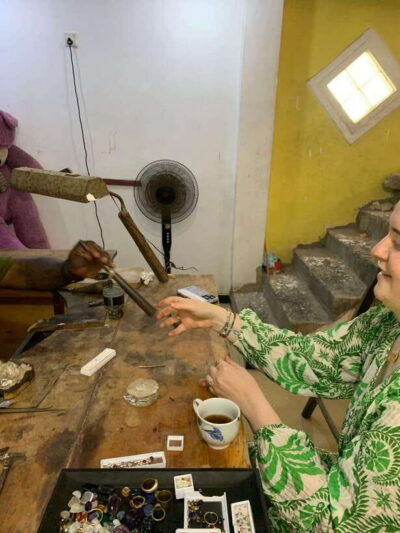
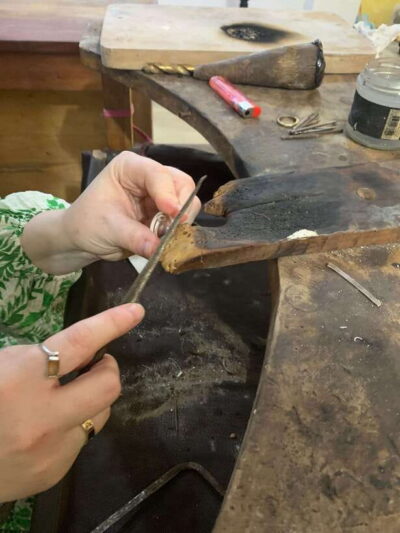
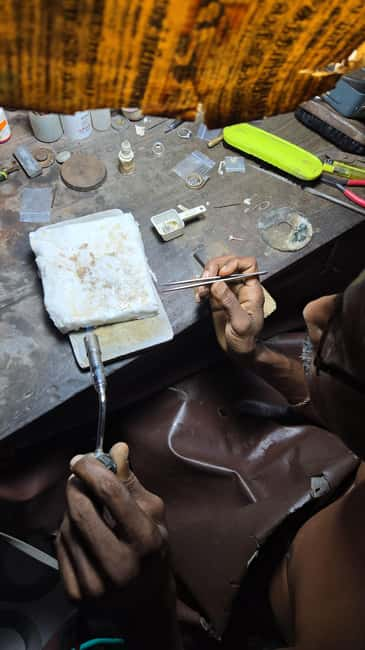
Jewelry Workshop Experience 3-6 Hours-Free Jewelry
Read our review →Browse the lists this tour appears in