
Reviewed · ANURADHAPURA TOURS
Anuradhapura Private Ancient City Day Tour
Anuradhapura is much too spread out for a quick stroll, and this private tuk-tuk tour gives you a smart way to connect its major sacred sites and archaeological remains in one afternoon. Guide Navin adds the missing context, explaining Buddhist customs, old royal life, and the meaning behind details you could easily pass without noticing.
I like the private format, since you can ask questions and adjust the pace instead of trailing behind a large group. I also like the relaxed tuk-tuk transport, hotel pickup, bottled water, and Navin’s habit of sharing practical Sri Lanka tips. The main drawback is cost: the $30 tour fee does not include entrance tickets, and the foreigner admission fee for the ancient city has recently been about another $30 per person.
Key points to know
- Twelve major stops in five hours: The route covers the city’s best-known stupas, monasteries, pools, statues, and carved entrance stones.
- Navin leads the experience: He explains Buddhism, Sri Lankan history, local customs, and wildlife in clear English, with plenty of humor.
- Tuk-tuk transport saves time: You avoid long walks between sites and get a quick lesson in driving one yourself.
- Private means flexible: The pace can allow time for photographs, questions, a short break, or choices about which sites to prioritize.
- Sacred sites require care: Bring a passport, comfortable shoes, and sun cream. Hats are not permitted.
- Budget for admission: The tour includes transport and guiding, but not the ancient-city entry ticket.
Why Anuradhapura works best with wheels
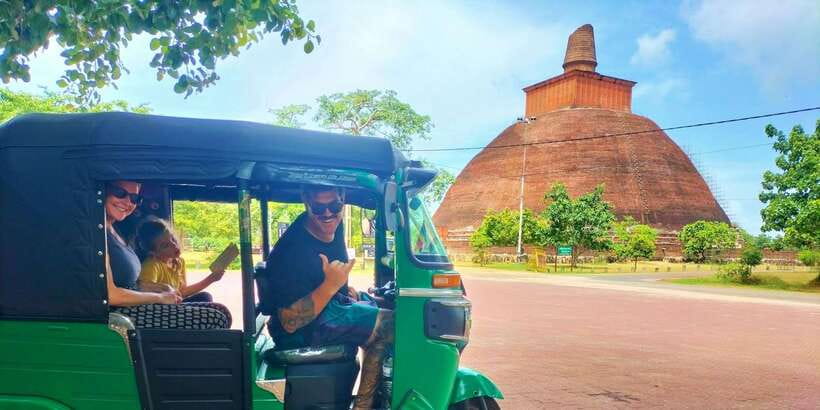
Anuradhapura was Sri Lanka’s first capital and remains one of the island’s most important Buddhist centers. Its ancient area is not one compact ruin field. Stupas, monasteries, pools, statues, and tree shrines are scattered across a broad zone, with roads linking one major site to the next.
That layout makes a tuk-tuk useful rather than merely fun. You spend less of your limited five hours walking between monuments and more of it seeing them. The open-sided vehicle also gives you a sense of place as you move through the old city, though you should expect sun, dust, and warm conditions.
The tour begins with pickup in Anuradhapura. You are asked to wait in your hotel lobby about 10 minutes before the scheduled time. From there, the ride and guided sightseeing occupy roughly five hours.
The group is private, so you are not sharing the experience with strangers. That matters here because the sites serve both as archaeological attractions and as active religious places. You can pause for questions and let your guide explain what is happening around you.
A few more Anuradhapura days worth a look
- Private City Day Tour in Anuradhapura
★ 5.0 · 383 reviews - Minneriya National Park Elephant Jeep Safari Private Tour
★ 5.0 · 68 reviews - Explore & Ride the history of anuradhapura with Vogel Tours
★ 5.0 · 62 reviews
Sri Maha Bodhi and the living heart of the city
Jaya Sri Maha Bodhi is one of the most important stops. This sacred fig tree is tied to the Buddhist tradition and remains an active place of worship, not simply an old monument behind a rope.
Navin can help you understand the difference between visiting an ancient site for its age and visiting a place that still shapes daily religious life. Take your time here, watch the atmosphere around the shrine, and follow local instructions about respectful behavior.
The scheduled visit is about 25 minutes. That is enough for an introduction, a look around, and photographs, but it is not a long meditation session. If this is the site that matters most to you, tell Navin early so you can use your private format wisely.
Ruwanwelisaya, the great white stupa
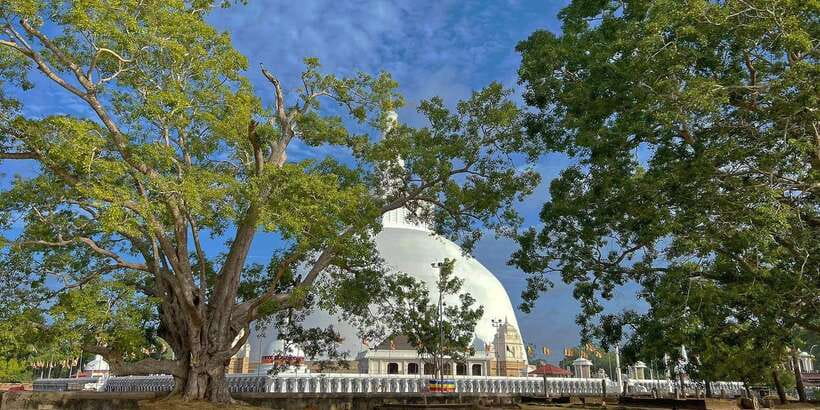
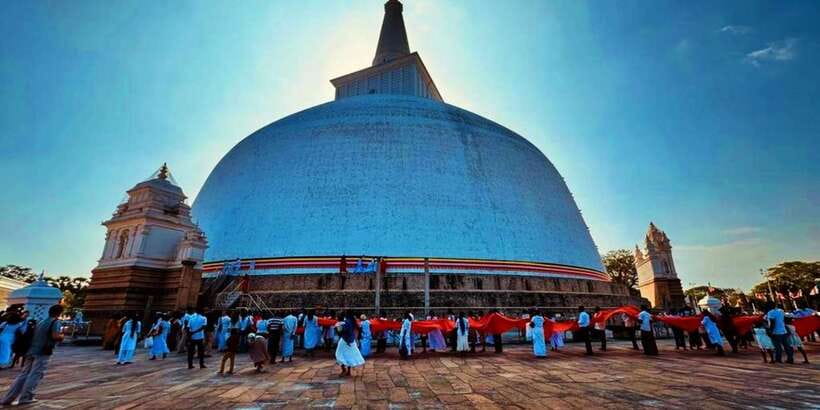
Ruwanweli Maha Seya is one of Anuradhapura’s most recognizable monuments. Its large white dome and carefully maintained setting give the visit a very different feel from the rougher brick ruins elsewhere in the ancient city.
This is a good place to learn about stupas and Buddhist worship. The shape is not just decorative. It reflects religious ideas and centuries of devotion, and Navin’s explanations help turn a striking structure into a place with meaning.
The planned stop lasts about 25 minutes. Wear shoes you can remove and carry easily, since religious areas may require you to go barefoot. Sun cream is important, especially around open courtyards where shade can be limited.
Jethawanaramaya shows the scale of ancient Anuradhapura
Jethawanaramaya is an enormous brick stupa and one of the clearest reminders that Anuradhapura was once a major center of power, learning, and religious life. Even when parts of a site are weathered, the scale gives you a strong sense of the work required to build it.
I find this kind of stop especially useful early in a tour because it gives you a reference point. After seeing Jethawanaramaya, the smaller foundations and monastery remains make more sense. You begin to picture the wider complex rather than seeing each ruin as an isolated pile of stone or brick.
The visit is timed for approximately 25 minutes. That keeps the route moving, although the largest monuments could easily take longer if you want detailed photographs or a slow circuit.
Same base, a completely different kind of day out:
- Minneriya National Park | Private Safari
★ 5.0 · 59 reviews - Wilpattu National park – Morning or Afternoon Safari
★ 4.3 · 57 reviews - From Anuradhapura: All Inclusive Full Day Safari at Wilpattu
★ 4.4 · 50 reviews - Minneriya National Park Safari – Private Jeep with Hotel Pickup
★ 5.0 · 44 reviews
Kuttam Pokuna and the engineering behind monastic life
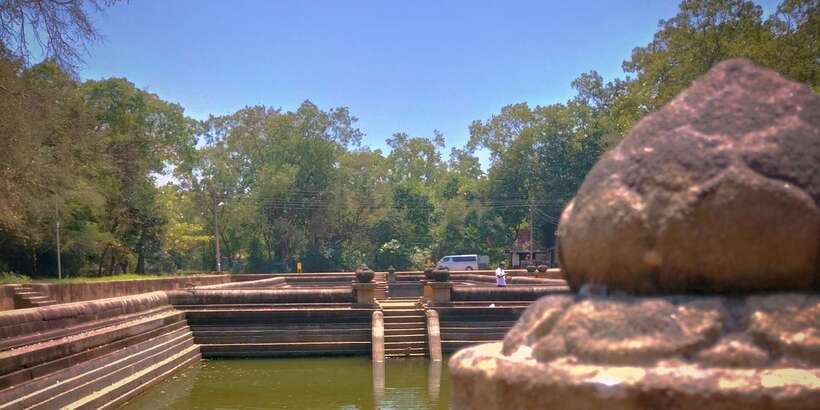
Kuttam Pokuna, or the Twin Ponds, is one of the tour’s more distinctive archaeological stops. These large bathing pools show the planning and practical skill built into the monastic complexes of ancient Anuradhapura.
The pools are easy to appreciate visually, but do not stop at the surface. Ask Navin how water management fitted into monastery life and why such structures were important. The value of a guide is strongest at sites like this, where the stonework is impressive but the original purpose is not immediately obvious.
The visit lasts around 25 minutes. The setting also gives you a change from the monumental stupas, with more attention on design, function, and daily life.
Samadhi Buddha and a quieter pause
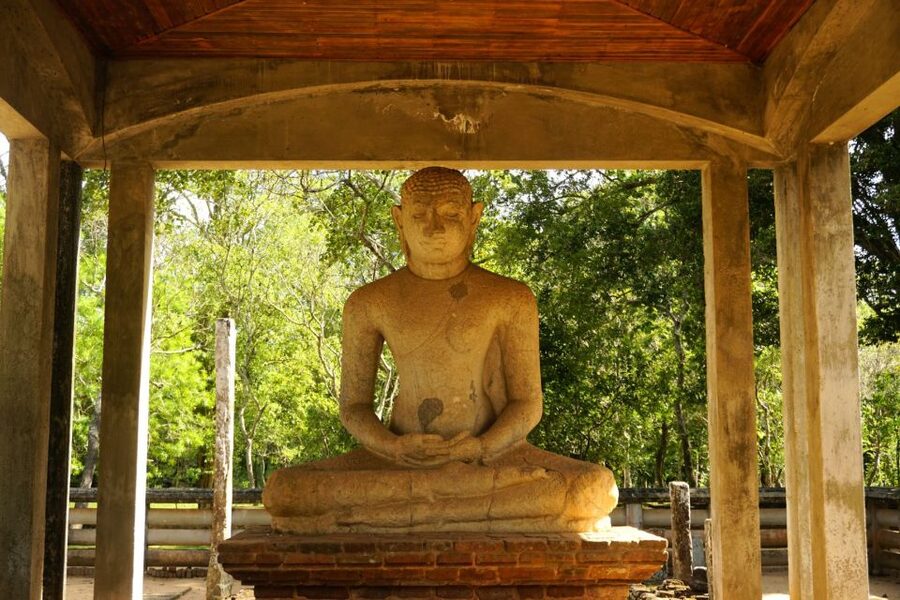
The Samadhi Buddha Statue offers a calmer stop. The seated image is associated with meditation and gives Navin room to explain Buddhist ideas in a way that connects the statue to the wider religious landscape of Anuradhapura.
This is a place to slow down and look closely at posture, expression, and the setting. You do not need to be an art specialist to enjoy it. A clear explanation helps you notice how the image communicates stillness and concentration.
The scheduled time is about 25 minutes. Keep your voice low and treat the area as a place of worship rather than a standard photo stop.
Abhayagiri Vihara and the monastery complex
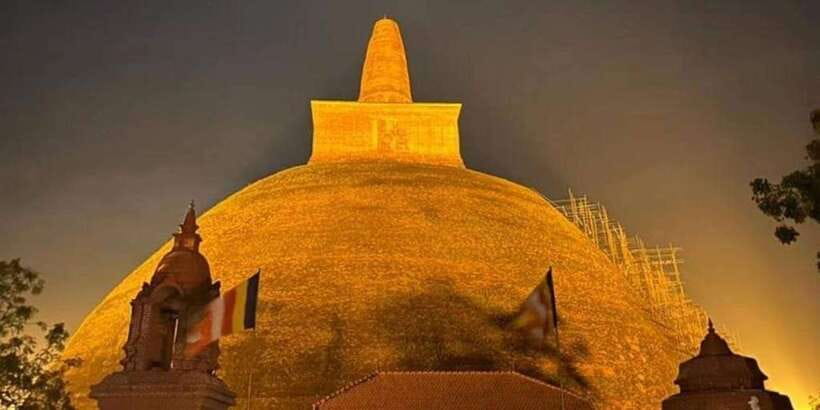
Abhayagiri Vihara is one of the largest and most important areas on the route. It is more than a single monument. It was a major monastic center, and the surrounding remains help show how religious communities once lived, studied, and organized themselves.
Navin’s strongest subject is the connection between the ruins and Buddhism in Sri Lanka. He can explain not only what a building was, but also why the site mattered and how religious thought influenced the culture around it.
The main visit is scheduled for about 25 minutes, followed by several nearby features. Because the area contains many separate remains, the route can feel full even with short stops. You will not see every corner of the complex, but you will get a useful introduction without spending an entire day on one section.
The refectory, Elephant Pond, and practical monastic life
The Main Refectory of Abhayagiri Monastery brings the ancient site down to a human scale. Instead of focusing only on kings and giant stupas, this stop points toward the everyday organization of monastic life.
The nearby Elephant Pond adds another visual highlight. Its name immediately catches the imagination, but the more useful question is how water and large public spaces fitted into the monastery complex. Navin can help you connect these structures to the needs of a large religious community.
Each stop is allotted roughly 25 minutes. That sounds generous on paper, but the whole tour contains many locations, so you should expect focused visits rather than long periods of unstructured wandering.
Moonstone and guard stones reward close attention
The Anuradhapura Moonstone is easy to underestimate. It may look like a carved threshold, but the patterns carry meaning and reward a careful explanation. This is one of those moments when a guide can point out details you might otherwise photograph and leave behind.
Muragala, the guard stone, provides another example of how entrances were marked and protected in symbolic terms. Look closely at the carving and placement. These pieces are not as visually dominant as the great stupas, but they often reveal how ideas were expressed through architecture.
I like that the route includes these smaller features. A tour made only of famous monuments would give you impressive photographs but a thinner understanding of the city.
Thuparama closes the route with another sacred landmark
Thuparama Seya is the final listed site before the return to Anuradhapura. It is another important stupa, but its place at the end of the route gives you a chance to compare it with Ruwanwelisaya and Jethawanaramaya.
By this point, you should have a clearer sense of the different roles these monuments played. Some sites are active places of worship. Others are archaeological remains. Some show grand royal ambition, while others reveal the practical side of monastic communities.
The tour then returns you to your pickup area in Anuradhapura. Five hours is enough for a strong first look, but not enough to study every ruin in detail. That is a fair trade if you have limited time in town.
What Navin adds to the ride
The guide is a major part of the experience. Navin speaks English clearly and explains both historical facts and Buddhist ideas. His style is friendly and energetic, with humor that keeps a long series of temple visits from becoming heavy.
He also gives you a short tuk-tuk lesson. This is a fun extra, but the important point is the transport itself. The tuk-tuk lets you cover ground quickly while keeping the trip personal.
Several details make the guiding feel more useful than a memorized monument tour. Navin can answer questions about Sri Lankan culture, recommend places for the rest of your trip, and point out birds and local wildlife along the way. He has also helped visitors with practical arrangements after the tour, including travel advice shared through WhatsApp.
The experience is conducted in English, and an English audio guide is also included. If English is not your first language, clear explanations and the private setting give you room to ask Navin to repeat or rephrase something.
Price, entry fees, and what you receive
The tour costs $30 per person. That includes a private guide, private tuk-tuk transport, hotel pickup and drop-off, water bottles, and the tuk-tuk lesson.
The entrance ticket is extra. A recent foreign visitor fee for the ancient city was about $30 per person, so two people could spend close to $120 in total once the tour and admission are combined. Check the current fee before booking because ticket prices can change.
The value depends on your priorities. If you only want transport from one monument to another, you may find the total cost high. If you want the sites explained, want to avoid negotiating several rides, and have only half a day, the price is easier to justify.
The private format also matters for families, couples, and small groups. You are paying for direct access to the guide’s time rather than a seat in a large vehicle.
Heat, clothing, and practical limits
The tour takes place in daylight, so plan for strong sun. Bring sun cream, water, comfortable shoes, and your passport. Bottled water is supplied, but your own sun protection remains essential.
Hats are not allowed on the tour. Dress respectfully for Buddhist religious sites and be ready to remove shoes where required. Comfortable footwear matters because the tuk-tuk reduces walking but does not remove it.
Wheelchair access is listed as available. Still, the route includes old archaeological areas and religious compounds, so anyone with specific mobility needs should confirm the details when booking.
The tour is not considered suitable for people over 95. The five-hour duration, heat, walking, and repeated site visits may also be tiring for anyone who needs frequent rest, so use the private format to request pauses.
Free cancellation is available up to 24 hours before the start, and you can reserve now and pay later. Starting times depend on availability.
Who should book this Anuradhapura tour?
I would choose this tour if you have one afternoon in Anuradhapura and want more than a collection of monument photographs. It suits history fans, first-time visitors, couples, families, and anyone who wants Buddhist sites explained in plain English.
It is also a good choice if driving, arranging several tuk-tuks, or finding the scattered ruins sounds like needless work. The route covers the major names while still including smaller features such as the Moonstone, guard stone, refectory, and Elephant Pond.
I would think twice if you prefer spending an entire day at one or two sites, dislike open-air transport, or want entrance fees included in the advertised price. Five hours gives you breadth, not slow archaeological study.
Should you book it?
Book this tour if you want a lively private guide, easy transport, and a well-packed introduction to Anuradhapura. Navin’s explanations about Buddhism, local culture, and the purpose of each ruin are the main reason to choose it over exploring alone.
Before you commit, add the ancient-city entrance fee to your budget, bring sun cream, and accept that the schedule moves steadily. If those points work for you, $30 per person is a sensible price for a private half-day that connects Anuradhapura’s major sacred and archaeological sites.
FAQ
How long does the Anuradhapura private tour last?
The tour lasts five hours, including tuk-tuk transport and guided sightseeing.
What does the tour include?
It includes a private tour guide, private transport by tuk-tuk, a tuk-tuk lesson, bottled water, and hotel pickup and drop-off in Anuradhapura.
Are entrance tickets included?
No. Tourist entrance tickets are not included in the tour price. A recent foreign visitor fee for the ancient city was about $30 per person.
Which language is the tour conducted in?
The live tour guide speaks English, and an English audio guide is included.
What should I bring?
Bring your passport, comfortable shoes, and sun cream. The tour takes place in daylight.
Can I cancel or pay later?
You can cancel up to 24 hours in advance for a full refund. You can also reserve the tour and pay later.
Newly listed around Anuradhapura
- Day Tour Anuradhapura from Kandy by Lux Tours Lanka★ 4.5 · 5 reviews
- Wilpattu Half Day Safari From Anuradhapura★ 5.0 · 4 reviews
- Adventure safari Experience in Hurulu Eco Park, Sri Lanka★ 5.0 · 18 reviews
- One Day Tour – Sacred city of Anuradhapura & Sacred city of Mihintale. (Sunset)★ 4.5 · 23 reviews
- Kaudulla National Park Shared Safari★ 5.0 · 7 reviews
- Minneriya National Park Half Day Elephant Safari★ 5.0 · 4 reviews
- Private Round Tour in Sri Lanka with Vehicle★ 5.0 · 6 reviews
- Hurulu Eco Park Half Day Safari★ 5.0 · 18 reviews
Anuradhapura Tours, compared.
Minneriya National Park Elephant Jeep Safari Private Tour
Read our review →
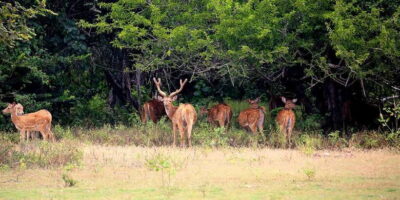
Wilpattu National park – Morning or Afternoon Safari
Read our review →
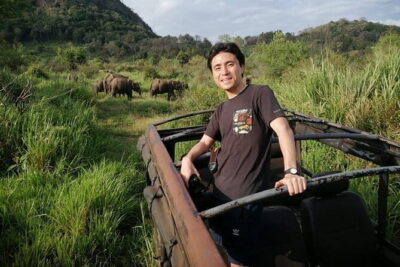
Minneriya National Park Safari – Private Jeep with Hotel Pickup
Read our review →
Delve Into Ancient Anuradhapura with Optional Visit to Mihintale
Read our review →
Minneriya National Park Safari [private , full package]
Read our review →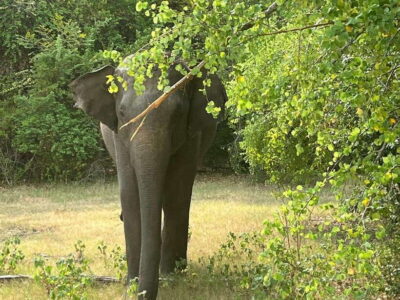
Browse the lists this tour appears in