
Reviewed · KANDY TOURS
Day Tour to Polannaruwa from Kandy by Lux Tours Lanka
Polonnaruwa’s greatest prize is Gal Vihara, where four Buddha images were cut from one long slab of granite. Add the compact Quadrangle, vast dagobas, and old image houses, and you get one of Sri Lanka’s finest archaeological days without needing to piece together the ancient city on your own.
I like the private format, since your group can move at its own pace with a guide rather than follow a large crowd. I also like the stop at the Archaeological Museum, which gives useful context before the ruins begin to blur together. Guide Dan has been praised for his friendly manner, careful attention, and ability to point out wildlife along the road.
The main drawback is the long and variable day. The tour is advertised at roughly five to 12 hours, and entrance tickets are not included at the listed stops, so you should confirm the pickup time, total driving plan, and ticket costs before setting out.
Key points to know before booking
- Gal Vihara is the star stop: Four granite Buddha images show the finest carving in the ancient city.
- The Quadrangle packs in the ruins: Polonnaruwa Vatadage sits among a dense group of temples and monuments.
- The Archaeological Museum adds essential context: Models, medical tools, and Hindu sculpture help explain what you see outdoors.
- You visit six major sites: The route includes image houses, a museum, the Quadrangle, and the island’s fourth-largest dagoba.
- This is a private tour: Only your own group takes part, with pickup offered.
- The price is $65: That can be good value for private transport and guiding, but admission fees are extra.
Why Polonnaruwa is worth the trip from Kandy
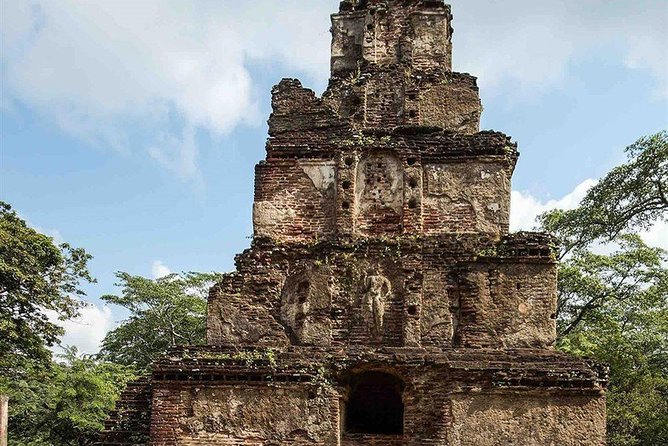
Polonnaruwa served as a royal capital about 800 years ago. In its prime, it was both a commercial centre and a major religious centre, with royal buildings, monasteries, hospitals, shrines, statues, and stupas spread across the central plains.
You do not need to be an archaeology specialist to enjoy it. The main ancient area contains a strong mix of large monuments and small details, and the stops on this tour give you a sensible cross-section of the city.
The attraction is the way the ruins fit together. A single site can show royal ambition, Buddhist devotion, skilled stonework, and practical city planning. You might see a massive dagoba at one stop, then a delicately carved image house a few minutes later.
From Kandy, this is not a quick hop. The duration can range from about five to 12 hours, which tells you how much the day depends on transport and timing. I would treat it as a full excursion rather than a short add-on between other Kandy activities.
A few more Kandy days worth a look
- Kandy Private Guided City Tour by Tuk Tuk
★ 4.9 · 1,307 reviews - From Kandy: Sigiriya Rock & Dambulla Cave Temple Adventure
★ 4.9 · 785 reviews - Kandy Village Cooking Class
★ 5.0 · 536 reviews
What the $65 price really covers
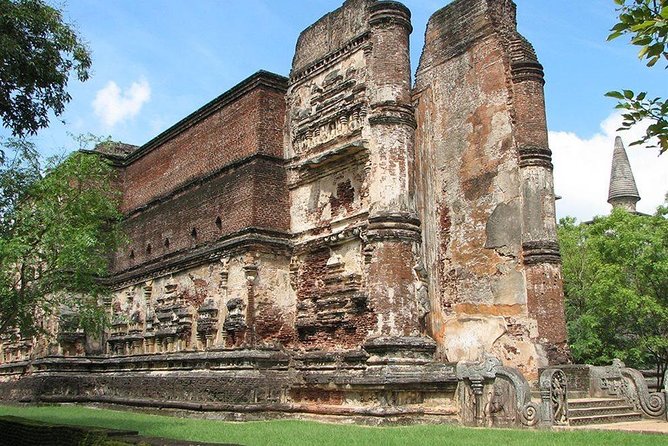
At $65, the tour is most appealing if you value a private vehicle, pickup, and a guide who can explain the sites in sequence. A private day also means you are not sharing the experience with a larger group, and the guide can focus on your questions.
That price needs a little care in the fine print. Admission tickets are not included for the listed stops, so the actual cost will be higher than $65. The supplied details do not give the entrance fee total, so ask Lux Tours Lanka for the current ticket amount before booking.
The value is strongest for two or more people sharing the private activity. For a solo visitor, the price may feel less attractive, especially once admissions are added. For a couple, family, or small group, private transport and guiding can make the cost easier to justify.
I also like that the route includes the museum, not just the most photographed ruins. Without some background, Polonnaruwa can become a parade of stone walls and statues. The museum helps you understand the city’s layout and gives you a clearer sense of how the religious and royal quarters worked.
Gal Vihara and the best stone carving in Polonnaruwa
Make Gal Vihara the emotional centre of your day. These four Buddha images were carved from one long granite slab and are linked with the northern monastery built under King Parakramabahu I.
The group includes different seated, standing, and reclining forms. Each image has its own mood, and the change from one figure to the next shows how much the sculptors could express in hard stone.
You have about 45 minutes here. That is enough to see the main carvings without rushing, although anyone interested in Buddhist art could easily want longer. This is a good place to ask your guide about the carving style, the monastery, and the way the images relate to one another.
The site is also a reminder that Polonnaruwa is not only about size. Rankoth Vehera impresses through scale, but Gal Vihara rewards close attention. Look at the faces, the posture, and the clean line of the granite rather than simply taking a quick photograph.
Admission is not included, so keep that in mind when comparing the tour price with a self-guided visit.
The Archaeological Museum puts the ruins in order
The museum is scheduled for one hour, making it the longest single stop. That is a useful choice because Polonnaruwa can seem confusing at first. The outdoor monuments are spread across former royal, monastic, and urban areas, while the museum arranges the story into clearer sections.
The displays cover the citadel, the outer city, the monastery area, and Hindu monuments. A model of the monks’ hospital is especially useful. It gives you a practical glimpse of how a religious complex served daily needs, not just worship.
You can also see medical instruments connected with the hospital. Small objects like these help turn an ancient city into a place where people studied, treated illness, worked, governed, and lived.
The Hindu monuments are another important part of the visit. Polonnaruwa was not a single-purpose Buddhist site, and the museum’s Hindu sculpture helps show the wider religious setting of the capital.
I would pay close attention here, even if museums are not usually your main interest. The displays can make the later stops easier to read, especially when your guide points out the difference between royal, monastic, and Hindu remains.
Same base, a completely different kind of day out:
- Kandy to Ella Train Tickets – Reserved Seats
★ 4.5 · 523 reviews - From Kandy: Pinnawala Day Tour
★ 4.8 · 331 reviews - Kandy to Ambuluwawa & Kandy City Guided Tuk Tuk Day Tour
★ 4.8 · 270 reviews - Kandy to Sigiriya Day Tour and Dambulla cave temple with private vehicle
★ 5.0 · 232 reviews
The Quadrangle and Polonnaruwa Vatadage
The area known as the Quadrangle is a compact raised section enclosed by a wall. It contains one of the densest collections of buildings in the ancient city, so it gives you a lot to see without long walks between every monument.
Polonnaruwa Vatadage is the key stop here. Its circular design and detailed stonework make it one of the most memorable structures in the group. The setting also helps you understand how the city concentrated important religious buildings in a formal area.
You have about 30 minutes at this stop. That is enough for an overview, but it may feel short if you want to inspect every carving or listen to a long explanation. A private tour helps because you can tell the guide if you need a little more time.
The Quadrangle is especially helpful for first-time visitors. Instead of seeing one isolated ruin, you see several related structures close together. The raised setting and enclosing wall also give the place a stronger sense of design than scattered foundations elsewhere in the ancient city.
Wear footwear suitable for walking around old stone surfaces, and remember that temple sites require respectful clothing and behaviour.
Lankathilaka Image House and its towering walls
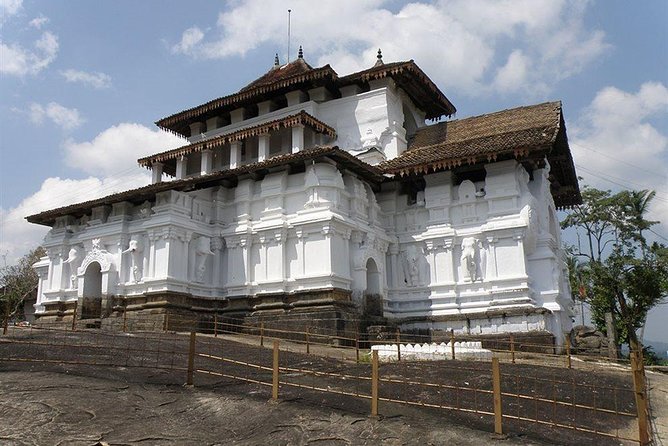
Lankathilaka is one of the most atmospheric buildings on the route. King Parakramabahu I built it, and King Vijayabahu IV later restored it. The structure is a gedige, a stone Buddhist temple with thick walls and a corbelled roof.
Its walls rise about 17 metres, so the first impression is one of height and enclosure. Even in ruin, the building feels powerful. You can picture the image house as a major religious building rather than a small shrine.
The scheduled visit lasts about 30 minutes. That gives you time to see the scale of the walls and study the remaining details, though the stop is more about atmosphere and form than a long list of separate monuments.
This is a good place for your guide to explain how an image house differed from a dagoba. The two types of building served different purposes, and seeing them on the same day makes that distinction easier to remember.
Thivanka Image House and the three-bent Buddha
Thivanka Image House marks the end of Polonnaruwa’s northern road. The name Thivanka means thrice bent, referring to the three-curve pose of the Buddha image inside.
That posture is notable because it is more often associated with female statues. The building is also valued for its fine frescoes, which add colour and surface detail to a route otherwise dominated by stone, brick, and earth.
You have about 30 minutes here. The visit may be particularly rewarding if you enjoy wall paintings and interior details more than massive outdoor monuments.
The stop also shows why a guide matters. The meaning of the name and the unusual pose are easy to miss if you are moving through the ruins alone. Ask for time to look carefully at the image house rather than treating it as one more stop on a long list.
Rankoth Vehera, the largest dagoba in Polonnaruwa
Rankoth Vehera gives the day a grand finish. At 54 metres, it is the largest dagoba in Polonnaruwa and the fourth-largest in Sri Lanka. It is linked with the reign of King Nissanka Malla.
A dagoba is a Buddhist structure built around a solid dome, and Rankoth Vehera shows the scale that royal patronage could achieve. The dome is made of earth and brick, like other major dagobas in Anuradhapura and Polonnaruwa.
The 30-minute stop is enough to take in the monument and its setting. You will not get the intimate carved detail found at Gal Vihara, but the size gives it a different kind of impact.
I like the contrast between this stop and the image houses. Gal Vihara asks you to look closely at a face and posture. Rankoth Vehera asks you to step back and take in a structure made to dominate the sacred centre of a capital.
A private guide can make the long day easier
The private format is one of the tour’s strongest practical features. Only your group takes part, and pickup is offered. That gives you a simpler day than arranging transport, finding each site, and working out the order on your own.
Guide Dan has been praised for being helpful, engaging, attentive, and friendly. His habit of pointing out wildlife during the journey is a nice extra, especially since the road between Kandy and Polonnaruwa is part of the day rather than dead time.
Another guide was described as explaining clearly and enthusiastically. Since the guide assigned to your booking may vary, it is sensible to ask who will lead your tour and what language the explanations will use.
The private format does not remove every practical issue. The day can still be long, and the available duration is listed as a broad range from five to 12 hours. Ask for a realistic schedule before departure, especially if you have an evening train, dinner booking, or another fixed plan in Kandy.
Who will get the most from this tour
I would recommend this excursion to anyone staying in Kandy who wants to see Polonnaruwa but prefers not to arrange the transport and route alone. It also suits people who want a guide to connect the buildings rather than simply point them out.
History and architecture fans will find plenty to examine, from the hospital model and medical instruments in the museum to the three-bent Buddha at Thivanka Image House. Photography fans get a strong range of subjects, including granite figures, circular stonework, tall dagobas, and huge temple walls.
Families and small groups may appreciate the private setup because the pace can be more flexible than a shared coach trip. You should still be comfortable with a long day and walking around archaeological sites.
I would hesitate if you only have a few hours in Kandy or dislike road journeys. I would also compare the final cost carefully if you are travelling alone, since tickets are extra and the $65 price is not the full spend.
Booking details and cancellation timing
Confirmation is received when you book, and the activity operates Monday through Sunday during the stated operating period from January 16, 2020, to November 26, 2026. The listed hours are 7:00 AM to 8:30 PM.
The tour is near public transportation, although pickup is offered. Most people can participate, and it is a private activity for your own group.
Free cancellation is available if you cancel at least 24 hours before the start time. Cancellation within 24 hours is not refundable, and changes made inside that period are not accepted. The cut-off follows local time.
Should you book the Kandy to Polonnaruwa tour?
Book it if you want a private, guided day that covers the key Polonnaruwa monuments in a clear order. The strongest reasons are Gal Vihara, the concentrated Quadrangle, the useful museum, and the chance to travel with a guide such as Dan, who has been praised for friendly service and sharp observation on the road.
Before paying, confirm the pickup time, expected total duration, guide arrangements, and admission fees. If those details fit your schedule and you are happy with a long day, $65 is a reasonable starting price for private transport and guiding. If you need a short outing or want the lowest possible cost, a self-arranged visit may suit you better.
FAQ
Where does the tour begin?
The tour is based in Kandy, and pickup is offered.
How long does the Polonnaruwa tour last?
The stated duration is approximately five to 12 hours.
Is this a private tour?
Yes. Only your own group participates in the activity.
Which sites are included?
The route includes Gal Vihara, the Archaeological Museum, Polonnaruwa Vatadage in the Quadrangle, Lankathilaka Image House, Thivanka Image House, and Rankoth Vehera.
Are admission tickets included in the $65 price?
No. Admission tickets are not included for the listed stops.
Can most people participate?
The tour information says most travelers can participate.
What is the cancellation policy?
You can cancel for a full refund up to 24 hours before the experience start time. Cancellations or changes made within 24 hours are not accepted, and the payment is not refunded.
Newly listed around Kandy
- Pinnawala private day trip from colombo or negombo★ 5.0 · 4 reviews
- Private all inclusive Day tour Kandy, Pinnawala, & your own selected attractions★ 5.0 · 13 reviews
- Air port Pick up and Drop to Kandy★ 5.0 · 4 reviews
- From Kandy to Nuwara Eliya Day Tour★ 5.0 · 21 reviews
- Kandy City Tour & Famous Ambuluwawa Tower with Friendly Chauffeur★ 5.0 · 11 reviews
- Sri Lanka 4 Day Private Tour★ 5.0 · 6 reviews
- Private Tuk Tuk Tour of Kandy City & Surroundings★ 5.0 · 35 reviews
- Wasgamuwa National Park Safari from Kandy★ 5.0 · 3 reviews
Kandy Tours, compared.
Kandy to Ambuluwawa & Kandy City Guided Tuk Tuk Day Tour
Read our review →
Kandy to Sigiriya Day Tour and Dambulla cave temple with private vehicle
Read our review →
Browse the lists this tour appears in