
Reviewed · WHALE WATCHING
Hikkaduwa/Galle/Ahangama: Whale Watching Tour in Mirissa
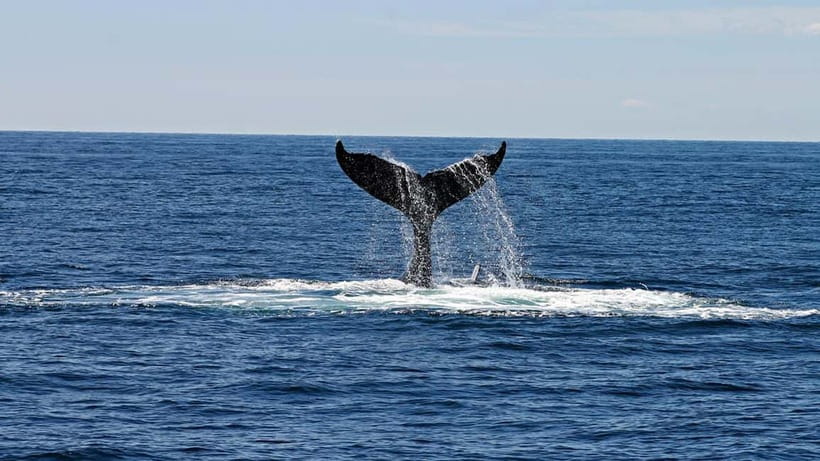
Mirissa’s open water is the main event here. From a well-equipped boat, you scan the horizon for a whale spout, a broad tail, or a pod of dolphins cutting through the Indian Ocean. The wildlife is not staged, so sightings can never be promised, but the chance to see blue whales and sperm whales in their natural setting is the real draw.
I like the small group of up to eight and the fact that hotel pickup and drop-off from Hikkaduwa, Galle, or Ahangama are included. I also like the stated respectful approach to marine life, backed by crew guidance and a clear rule against touching animals. The early start and open-water conditions are the main considerations, especially if you are prone to seasickness.
Key points to know
- Blue whales, sperm whales, and dolphins: The tour focuses on large marine life in its natural habitat, not a captive display.
- Four hours on the water: The whale-watching portion gives you time to scan for spouts, tails, and moving pods.
- Pickup from three coastal areas: Transport is included from Hikkaduwa, Galle, and Ahangama.
- Small group, maximum eight people: A limited group makes the boat experience more manageable than a crowded outing.
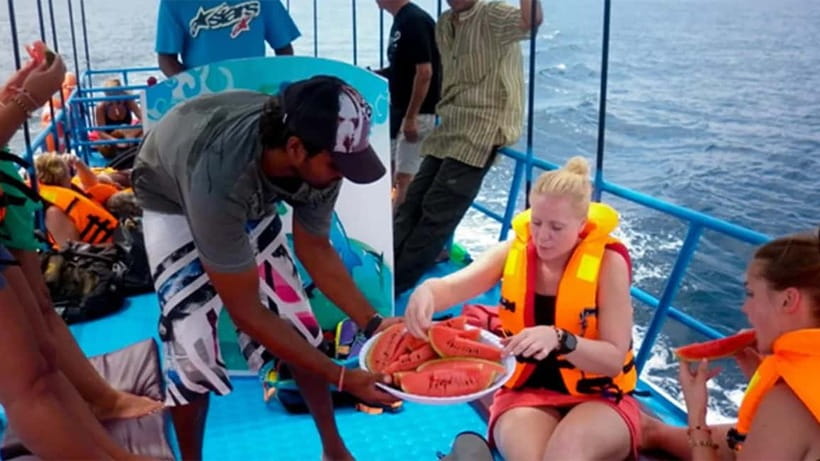
- English commentary and refreshments: The crew provides marine-life information, safety gear, and drinks during the trip.
- Early morning and eco-minded: You need to be ready early, and you must follow instructions that protect the animals.
Why Mirissa is the setting for this morning
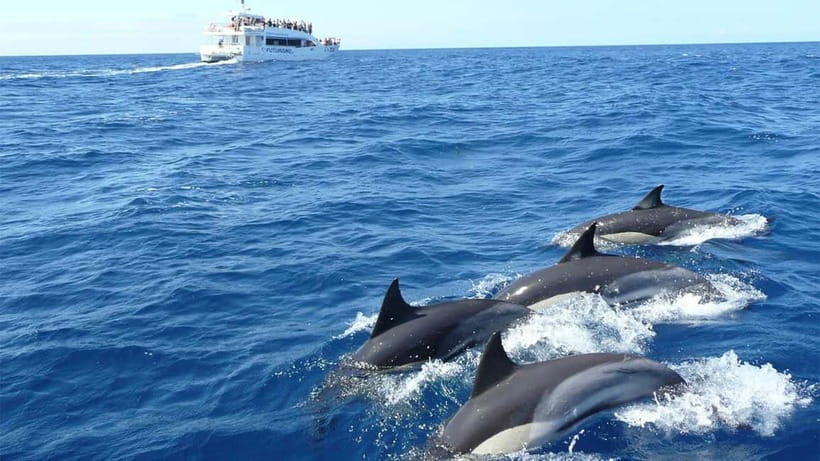
Mirissa is the departure point for this experience, while the activity itself takes place out on the Indian Ocean. That distinction matters. You are not visiting a whale enclosure or a fixed viewing platform. You are going to sea and looking for wild animals in a large, moving environment.
That makes the outing exciting, but it also means nature sets the schedule. A whale might surface close enough for a clear view, or it might appear farther away and vanish before you raise your camera. Dolphins may move quickly across the water, while a whale may show only a spout or tail before disappearing again.
The reward is a more honest wildlife encounter. You are watching animals where they live, with no guarantee of a perfect photograph or constant action. I would book this for the chance to witness wild marine life, not for a promise of a whale beside the boat.
The golden light of the early morning adds something to the ride. It can make the sea feel calm and spacious at the start, though the open water may still be tiring for anyone sensitive to motion. Bring the supplied practical gear, but also prepare yourself for several hours in the sun and wind.
More Whale Watching Trips in Hikkaduwa:
- Whales and Dolphins Watching-Luxury Super Grade Cruiser(Hotel Pick up offered)
★ 5.0 · 1,268 reviews - Whale Watching Mirissa with ( WWC )
★ 5.0 · 252 reviews - Whale Watching Mirissa with Eagle Eye
★ 4.5 · 128 reviews
Getting from Hikkaduwa, Galle, or Ahangama to the boat
The day begins with pickup from your hotel in one of three areas: Hikkaduwa, Galle, or Ahangama. The transfer to Mirissa is included, which is a useful part of the $87 price. You do not need to arrange a separate ride to the departure point and then find your own way back after the boat trip.
This is especially helpful if you are staying in Hikkaduwa or Galle and want a whale-watching morning without changing hotels. The experience also includes a return transfer to Hikkaduwa, Galle, or Ahangama, so the whole outing is planned around getting you back to your accommodation.
The exact pickup time depends on availability, but the departure is early morning. Check the start time before booking and keep your first part of the day free. This is not an activity to squeeze between a late breakfast and another timed tour.
The supplied information gives the location as Kotapola while the tour departs for whale watching from Mirissa. For practical planning, focus on the stated pickup areas and confirm the precise meeting details when you reserve. The important point is that transport to and from the Mirissa departure is included.
Four hours watching the Indian Ocean
Once aboard, you have about four hours for the whale-watching portion. That is a useful amount of time because marine animals do not follow a timetable. A longer spell on the water gives the crew more time to search and gives you more chances to spot movement on the surface.
The crew handles the boat and provides safety gear. You can spend your attention on the water rather than on the practical details of operating a vessel. The boat is described as well-equipped, but no exact seating arrangement or onboard facilities are specified, so you should ask if those details matter to you.
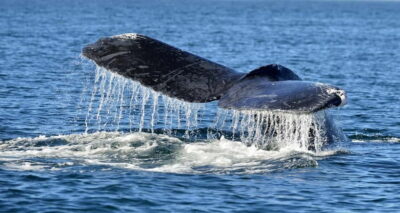
Your basic task is simple: watch. Look for a tall spout, a dark back, a tail lifting from the water, or several dolphins moving together. Keep your camera ready, but do not let the camera replace the experience. A whale can appear and disappear in seconds.
The crew also provides commentary in English. This turns the trip into more than a search for large animals. You can learn about the marine life you see and better understand why the crew asks you to keep your distance and avoid contact.
Refreshments are included, but meals are not. Plan to eat before the pickup if you need a substantial breakfast, and do not mistake the included drinks or light refreshments for a full meal. That small bit of preparation can make the early start much easier.
Blue whales, sperm whales, and dolphins in the wild
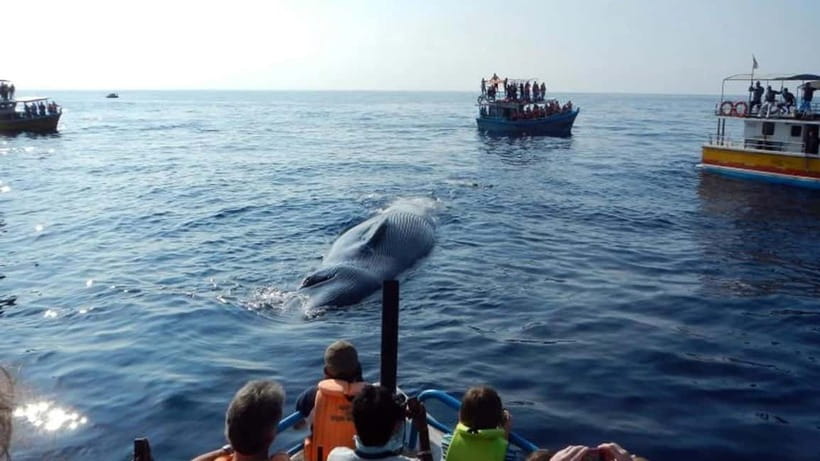
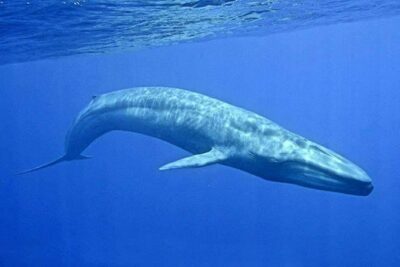
Blue whales are the headline sighting. They are among the largest animals on Earth, and even a brief view of one can be striking. The experience highlights the chance to see them, along with sperm whales and dolphins, but it does not promise that every species will appear on every departure.
That uncertainty is part of the deal with wildlife watching. You may see a whale’s spout before seeing the animal itself. You may get a clear view of a tail, or you may spend time scanning empty water between sightings. A good attitude is to value the full sea experience and treat each animal sighting as a bonus rather than a guaranteed performance.
Sperm whales offer a different kind of encounter from blue whales, and dolphins can bring quick movement to the surface. The tour’s expert commentary can help you make sense of what you see, especially if an animal surfaces only briefly.
The instruction not to touch marine life is basic but important. Do not reach toward an animal, try to attract it, or treat a close pass as permission to interact. The stated eco-friendly approach asks you to watch without interfering, which is exactly the right mindset for a wild-animal tour.
A few more Hikkaduwa days worth a look
- Hikkaduwa/Galle/Weligama/Mirissa/Tangalle: Yala Safari Tour
★ 4.8 · 263 reviews - Hikkaduwa/Galle/Mirissa/Hiriketiya/Tangalle:Day Trip to ELLA
★ 4.8 · 171 reviews - The Most Recommended Round Tour in Sri Lanka
★ 5.0 · 116 reviews - Hikkaduwa/Galle/Weligama/Mirissa/Tangalle: Udawalawa Safari
★ 4.8 · 114 reviews
What the small group changes
The group is limited to eight participants. That is one of the strongest practical features of the experience. A small group means fewer people competing for attention when a whale surfaces and less chance of the boat feeling packed with bodies and cameras.
It also makes the guide’s commentary easier to follow. If you have a question about a sighting or about the animals, a smaller setting should make it simpler to hear the answer. The crew can give safety instructions without trying to reach a large crowd.
Still, eight people is not the same as a private charter. You will share the boat, and everyone may not be looking in the same direction when an animal appears. Be ready to point out sightings clearly and give others room to watch.
The small-group format suits couples, solo visitors, and families with older children who want a more controlled outing. Children under six are not accepted, so this is not a fit for families with very young children.
Safety, seasickness, and what to pack
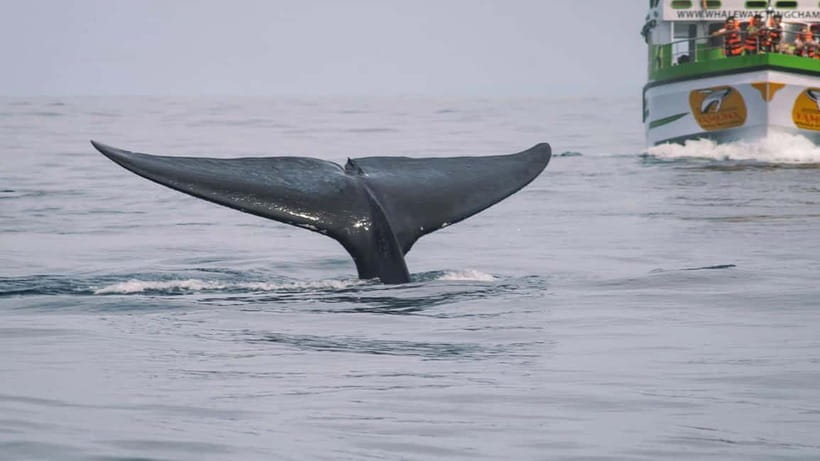
The crew provides safety gear, and safety is presented as a priority. Listen carefully to the instructions before the boat moves away from shore, then follow the crew’s directions during wildlife sightings. Respect for the animals and respect for the boat’s rules go together.
Seasickness is the biggest personal concern listed for this trip. If you are prone to it, four hours at sea can feel long. The tour is not suitable for people who regularly struggle with motion on boats, so take that warning seriously instead of hoping the water will be perfectly calm.
Your packing list is short:
- Hat
- Sunscreen
- Camera
- Binoculars
The hat and sunscreen matter because you will spend a long morning outside. Binoculars can help when a whale surfaces at a distance, while a camera is useful for recording the moment, though no photograph is guaranteed.
Wear practical clothing for an early morning on the water. The supplied details do not specify a dress code or footwear, so avoid assuming that special equipment is provided beyond the stated safety gear. Most important, arrive ready for sun, wind, spray, and a moving boat.
Is $87 a fair price?
The price is $87 per person. The value depends largely on where you are staying and how much you value having the day organized from start to finish.
The fee covers pickup and drop-off from Hikkaduwa, Galle, or Ahangama, the whale-watching boat trip, an experienced crew, refreshments, safety gear, and English commentary. You are paying for more than time on the water. You are also paying for transport to Mirissa and back, which removes the need to arrange separate transfers.
The four-hour boat portion is another strength. A short outing might feel disappointing if animals take time to locate, but four hours gives the crew a reasonable period to search. It also gives you time to settle into the rhythm of watching the sea.
The price does not include meals. You should allow for your own breakfast or other food, especially because the departure is early. The booking also offers free cancellation up to 24 hours before the activity for a full refund, plus the option to reserve now and pay later. Those terms are useful if your Sri Lanka plans are still changing.
I would judge the price favorably if you are staying in one of the included pickup areas and want a small-group trip. It is less attractive if you already have transport and could easily reach Mirissa on your own, but the included return transfer still adds practical value.
Who should book this morning at sea?
This tour fits you best if you want a focused marine-life outing rather than a full-day sightseeing program. You should be comfortable with an early start, several hours on a boat, and the possibility that wildlife sightings may be brief or limited.
It works well for adults and children aged six or older who can follow safety instructions and tolerate time on open water. The small group is a good match if you prefer a quieter boat setting and want commentary in English.
I would also recommend it to photographers who understand that wildlife photography requires patience. Bring the camera, but bring binoculars too. A good view through binoculars may be more rewarding than a rushed photograph of a distant tail.
I would not choose it if you dislike boats, often suffer from seasickness, need a late start, or want a guaranteed close-up encounter. The tour is respectful by design, and that means the crew should not chase, touch, or force contact with the animals.
Should you book the Mirissa whale-watching tour?
Book it if seeing blue whales, sperm whales, or dolphins in the wild is high on your Sri Lanka list and you value the convenience of hotel transfers. The maximum eight-person group, four hours on the water, English commentary, refreshments, and included safety gear make this a well-organized choice for a morning from Hikkaduwa, Galle, or Ahangama.
Skip it if you are prone to seasickness or need certainty about what you will see. Wild whales do not perform on demand, and the experience is strongest when you accept the waiting, keep your expectations realistic, and treat every spout or fin as a genuine encounter.
FAQ
Where does the whale-watching tour depart from?
The tour includes a transfer to Mirissa, where you board the boat for the whale-watching trip.
Is hotel pickup included?
Yes. Pickup and drop-off are included from hotels around Hikkaduwa, Galle, or Ahangama.
How long does the activity last?
The total activity takes about four to five hours, including the planned whale-watching portion of about four hours.
Which animals might I see?
The tour focuses on blue whales, sperm whales, and dolphins. Sightings are in their natural habitat and are not guaranteed.
Is the tour suitable for young children?
No. The activity is not suitable for children under six years old.
What should I bring?
Bring a hat, camera, sunscreen, and binoculars. Safety gear and refreshments are included, but meals are not.
Newly listed around Hikkaduwa
- Sinharaja Rainforest Trip★ 5.0 · 7 reviews
- Surfing Lessons★ 4.5 · 7 reviews
- Udawalawa National Park Safari trip from Hikkaduwa/Galle/Weligama★ 4.5 · 7 reviews
- Hikkaduwa to Colombo Airport★ 5.0 · 10 reviews
- Kayaking Adventure on serene waters through mangroves, Akurala★ 5.0 · 42 reviews
- Airport Transfer by Hikkaduwa Taxi Service★ 5.0 · 5 reviews
- Best Surfing Experience in Sri Lanka (Single Surf Lessons)★ 5.0 · 11 reviews
- Airport transfers | Airport pickups and drops – Hikkaduwa★ 4.0 · 5 reviews
Whale Watching, compared.
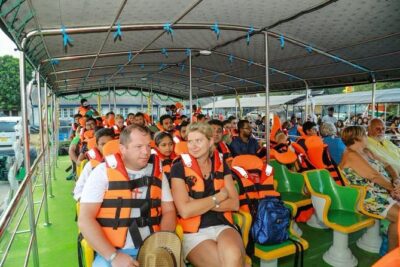
Whales and Dolphins Watching-Luxury Super Grade Cruiser(Hotel Pick up offered)
Read our review →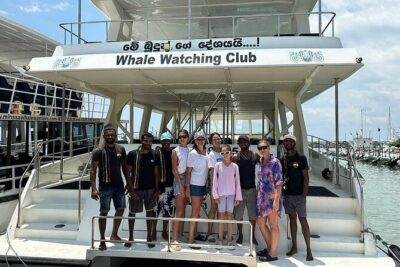
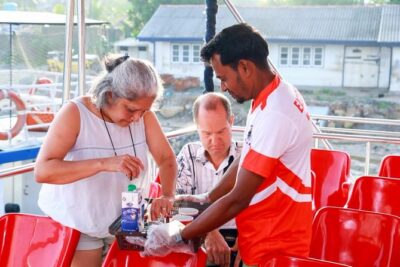
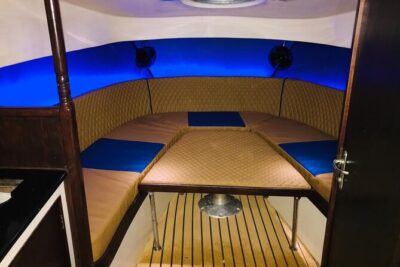
Sports Boat- Private Whale Watching Trip( free breakfast & paid pick-up)
Read our review →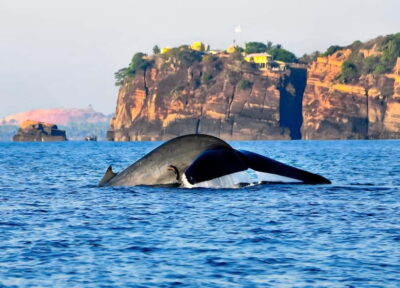
Browse the lists this tour appears in