
Reviewed · WALKING TOURS
Colombo Social and Political Walk
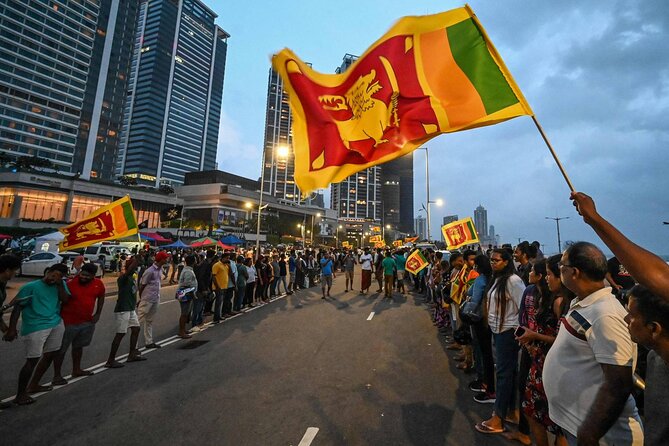
Sri Lanka’s current crisis is the starting point for this information-heavy Colombo walk, but the story reaches much further back. You move from the city’s port and markets to symbols of government, trade, independence, and national development. The aim is not a quick sightseeing stroll. It is a documentary-style look at how modern Sri Lanka took shape and where it may be heading.
I like two things here. First, the route links ordinary places, such as Pettah market, with major political sites, including Old Parliament and Independence Square. Second, guide Chami brings strong subject knowledge to the walk, giving you useful political and economic background as you go. The main drawback is clear: this is better for people who enjoy listening and thinking than for anyone seeking a relaxed food or architecture tour.
Key points before you book
- A 2.5-hour route with a serious purpose: This walk examines Sri Lanka from the creation of the modern state to current events.
- Eight varied Colombo stops: You visit Port City, Pettah market, Good market, the Dilmah Building, the World Trade Center, Old Parliament, Independence Square, and BMICH.
- Guide Chami leads the discussion: The experience places strong weight on explanation, context, and first-hand research.
- A 5 pm start: The late-day timing takes you through central Colombo and ends at BMICH rather than returning to the starting point.
- Small-group format: The maximum is 25 people, large enough for varied questions but still more focused than a city tour with a huge crowd.
- A useful choice for politically curious visitors: You should book this for context and analysis, not for a list of postcard sights.
Why this Colombo walk feels different
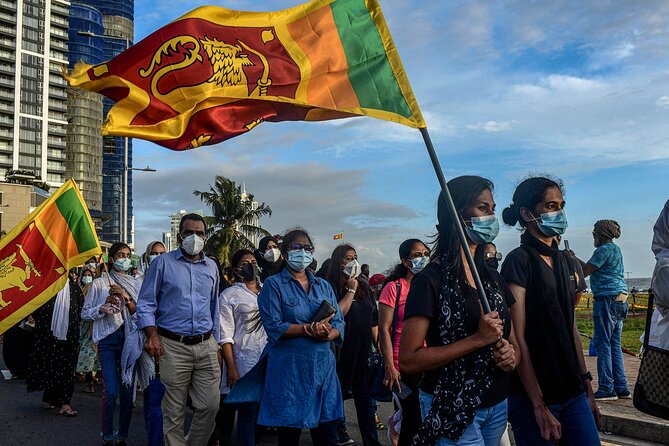
Many city tours use politics as a short backdrop before moving on to temples, food, or colonial buildings. This one reverses the order. The city becomes evidence for a discussion about power, money, public life, and national identity.
That makes the walk particularly timely. Sri Lanka is facing shortages of food, fuel, and electricity, with serious effects on businesses and healthcare. The experience addresses that crisis directly, while also looking at the older structures and decisions that help explain the present.
I appreciate the stated effort to keep the discussion balanced. You are not being handed a simple political slogan or told what conclusion to reach. Instead, the walk gives you material to consider for yourself. That is valuable in Sri Lanka, where current events can be complicated and emotionally charged.
You should also understand the format before booking. The walk is designed to have the pace and information load of a documentary. Expect a lot of explanation. You may spend less time taking posed photos and more time listening, asking questions, and connecting one location with another.
More Walking Tours in Colombo:
- Colombo Walking Tour with Ajeet De Soyza
★ 5.0 · 43 reviews - Glimpse Of Colombo City Walk
★ 4.5 · 11 reviews - Galle Fort Walking tour
★ 4.9 · 285 reviews
Starting at The Kingsbury Colombo at 5 pm
The walk begins at The Kingsbury Colombo, at 48 Janadhipathi Mawatha. That puts you near the central business and waterfront area, a useful place to begin a discussion about trade, urban growth, and state planning.
The 5 pm start matters. You are not setting out in the middle of the day, and the route finishes at BMICH after about two and a half hours. Since the walk does not return to the hotel, plan your evening around the end point rather than assuming you will finish near The Kingsbury.
A mobile ticket is provided, and booking confirmation arrives at the time of booking. Most people can take part, but you should be ready for sustained walking and a lot of spoken information. The available details do not promise a particular pace or amount of sitting, so comfortable shoes and water are sensible choices.
Colombo Port City and the question of development
Colombo Port City opens the route with one of the city’s clearest examples of modern development. Here, the discussion can place new construction and economic ambition beside the pressure Sri Lanka faces today.
This stop is useful because it shows that politics is not only found in parliament buildings. Decisions about land, investment, trade, and urban planning affect how a capital grows and who benefits from that growth. Port City gives the conversation a physical setting rather than leaving it at the level of abstract policy.
You should not expect a full architectural tour of the area. The purpose is to use the location as part of the larger story. If your interest is in how Colombo presents itself as a commercial capital, this is a strong early stop. If you mainly want historic buildings, it may feel less satisfying.
Pettah market and public life in Colombo
Pettah market changes the tone. From large-scale development, you move into one of the city’s key everyday commercial areas. The market helps connect national problems with daily life, including the way people buy goods, run businesses, and cope with shortages.
I like this part of the route because it keeps the discussion grounded. Economic statistics can feel distant. A market makes the subject more immediate. It also gives you a chance to see a more ordinary side of Colombo while discussing wider social questions.
The trade-off is that Pettah can be demanding as a walking environment. The provided details do not specify how long you remain there or which parts of the market you visit, so do not book this expecting a guided shopping session or a dedicated street-food tasting. The market is part of the political and economic story, not the whole show.
A few more Colombo days worth a look
- Colombo: Private Tuk-Tuk City Tour with All Entry Fees
★ 4.9 · 2,154 reviews - From Colombo: Sigiriya and Dambulla Day Trip with Safari
★ 4.7 · 842 reviews - Sri Lanka Personal Tour Driver in private vehicle
★ 5.0 · 747 reviews - Colombo Tuk Tuk City Tour -Sightseeing Entry Fees & Food Included
★ 5.0 · 678 reviews
Good market and the social side of the story
Good market is another stop that helps shift the discussion from national policy to the way people experience society. Its place on the route suggests that the walk does not treat politics as something confined to officials and institutions.
This is where the experience can help you think about the gap between national plans and daily routines. A market is a practical setting for questions about access, prices, business conditions, and changing consumer life. Those subjects are especially relevant during a period of shortages and economic strain.
The information available does not give a detailed description of Good market itself. I would therefore treat it as a discussion stop, not book it for a particular product, meal, or shopping activity. Its value comes from the conversation attached to the place.
Tea Avenue and the Dilmah Building
The Tea Avenue stop at the Dilmah Building brings one of Sri Lanka’s best-known economic products into the discussion. Tea has a natural link to questions about trade, branding, exports, employment, and the way a country presents itself abroad.
This stop adds welcome variety. You are not only hearing about government and crisis management. You are also looking at a business identity and an industry that helps shape Sri Lanka’s image and economy.
The listing does not promise a tea tasting or a visit inside the building, so keep your expectations practical. The point is the connection between a recognisable Sri Lankan product and the larger discussion of national development. You may find this stop especially useful if you want the economic story to include business and trade, not only political institutions.
The World Trade Center and Colombo’s commercial ambitions
At the World Trade Center, the walk returns to the city’s commercial identity. The building represents finance, international business, and the ambitions of a capital that wants to connect with the wider world.
Placed after the markets and tea discussion, this stop helps build a chain of ideas. You see local commerce, a major export industry, and an international business district within the same walk. That sequence is one of the route’s strengths. It gives you several scales at once, from individual buying and selling to national economic goals.
Again, this is not a dedicated observation-deck or building tour. The World Trade Center serves the political and economic conversation. If you enjoy understanding how a city works, you will get more from this stop than someone looking only for visual highlights.
Old Parliament and the mechanics of power
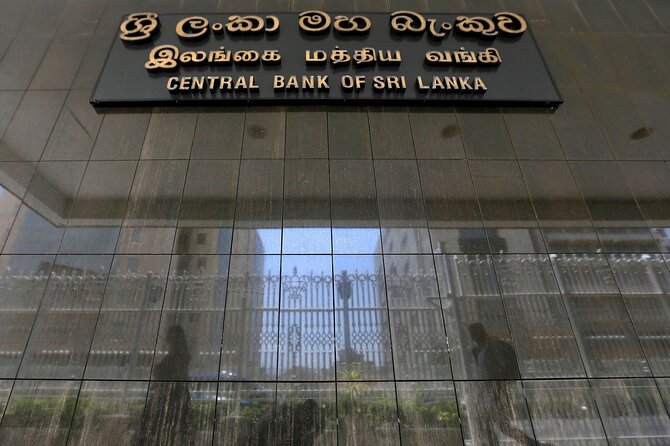
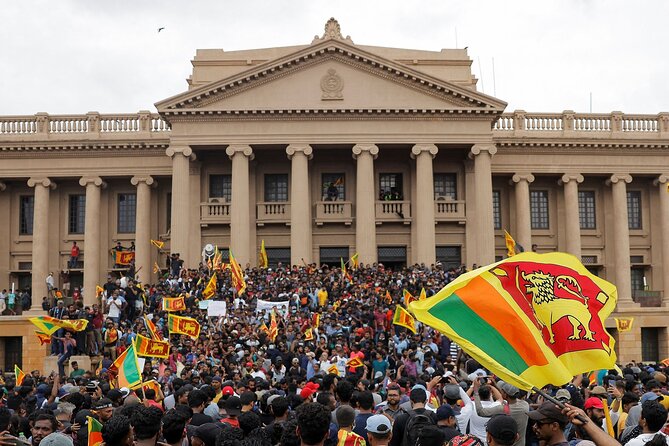
Old Parliament gives the walk a direct political centre. The building provides a clear setting for discussing government, institutions, and the creation of the modern state.
This part should appeal to anyone who wants more than a surface account of Sri Lanka’s past. The route is not limited to colonial-era dates or architectural facts. It asks you to consider how political systems developed and how earlier choices connect with the present.
The stated approach is balanced and non-biased, which matters most at stops like this. You are encouraged to form your own view rather than accept a single official version. Chami’s role is important here. His job is not simply to point out the building, but to make the site part of a longer explanation.
Independence Square and the meaning of national identity
Independence Square shifts the discussion toward nationhood and public identity. It is a natural place to consider how Sri Lanka defines itself, how independence is remembered, and how national ideas shape current politics.
I like the way this stop complements Old Parliament. One site focuses on the machinery of government. The other gives more room for questions about memory, symbols, and the public story a country tells about itself.
You should not expect the walk to settle every historical or political question. That would be too much to ask in two and a half hours. Its success depends on giving you a framework for further thought, and this stop seems well suited to that purpose.
Finishing at BMICH
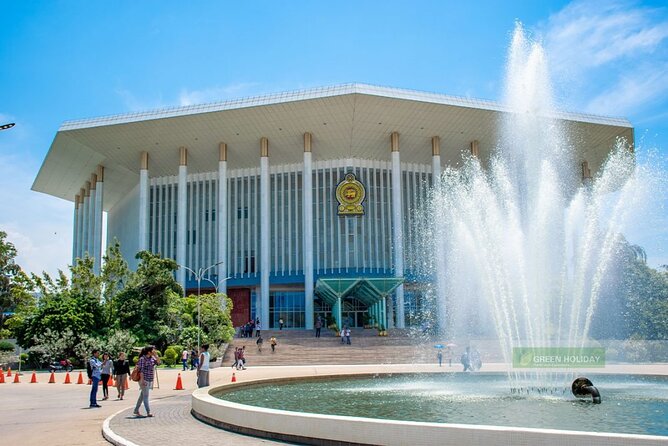
The route ends at BMICH, the Bandaranaike Memorial International Conference Hall, on Bauddhaloka Mawatha. Ending here gives the walk a final institutional setting, one connected with conferences, public affairs, and national events.
The end point also has a practical consequence. You finish at BMICH rather than returning to The Kingsbury Colombo. Check your evening plans before booking, especially if you have dinner, transport, or another timed activity in the central business district.
The route covers a lot of ground in roughly 150 minutes. That is efficient, but it also means you should not expect long visits at each location. The strength is the sequence and the explanation. The weakness is that every stop receives only part of the total time.
Is $35.99 good value?
At $35.99 per person, this is not the cheapest way to walk around Colombo. You can see many public places without paying for a guide. The question is what you want from the outing.
I consider the price reasonable if you would otherwise struggle to understand the links between the sites. You are paying for a planned route, a focused political and economic discussion, and a guide who can connect modern history with current events. The value is in the interpretation, not in entry to a museum or a meal.
The price is less attractive if you want a conventional sightseeing tour with many interior visits, food samples, or entertainment. No such extras are listed. You are buying an educational walk, and the experience works best when you are prepared to pay attention.
The small maximum of 25 people helps. It is not a private tour, but it should be more manageable than a large group. A group of that size can still affect how many questions you ask, so people who want a very personal conversation may prefer a smaller format if one is available.
Who should book this experience?
I would choose this walk if you have a genuine interest in politics, economics, recent history, or the causes behind Sri Lanka’s present crisis. It also suits you if you like seeing a city through its institutions and working life rather than only through monuments.
This is a good fit for visitors who have already seen some of Colombo and now want context. It can also work early in a visit if you want a framework for understanding the country, though the subject matter is serious from the start.
I would skip it if your ideal afternoon involves easy conversation, scenic stops, or a food-focused outing. The route is deliberately information-heavy. You need curiosity and a willingness to listen.
Weather is another practical point. The experience requires good weather, and poor conditions can lead to a new date or a full refund. You can cancel for a full refund up to 24 hours before the start time. Inside that window, the payment is not refunded, and changes are not accepted.
Should you book the Colombo Social and Political Walk?
Book it if you want to ask why Colombo looks and functions as it does. The route brings together Port City, markets, tea, finance, parliament, independence, and a major conference hall in a way that a standard highlights tour usually does not.
The strongest reason to go is the mix of places and explanation. Chami’s background in the subject, the 5 pm start, and the maximum group size make this a focused way to spend an evening. Just keep your expectations honest. You are signing up for a serious, documentary-style conversation with walking, not a light city ramble.
FAQ
How long is the Colombo Social and Political Walk?
The experience lasts approximately 2 hours and 30 minutes.
What time does the walk start?
The walk starts at 5 pm.
Where does the tour begin?
It begins at The Kingsbury Colombo, 48 Janadhipathi Mawatha, Colombo.
Where does the tour finish?
The walk ends at BMICH, the Bandaranaike Memorial International Conference Hall, on Bauddhaloka Mawatha in Colombo 00700.
What places are included on the route?
The route includes Colombo Port City, Pettah market, Good market, Tea Avenue at the Dilmah Building, the World Trade Center, Old Parliament, Independence Square, and BMICH.
How many people can join?
The experience has a maximum group size of 25 people.
What happens if I need to cancel?
You can cancel at least 24 hours before the start time for a full refund. Cancellations or changes made less than 24 hours before the start time are not refunded or accepted. If poor weather or an insufficient number of bookings causes cancellation, you are offered another date or experience, or a full refund.
Newly listed around Colombo
- Transfer between Colombo (CMB) Airport and Galle Face Hotel★ 5.0 · 4 reviews
- Colombo Airport (BIA) to Galle Private Airport Transfer★ 5.0 · 3 reviews
- Sri Lanka Private Transfer from Colombo Airport to Anywhere★ 5.0 · 6 reviews
- Sri Lanka Private Tour Pick Up & Drop Off – Colombo Intl Airport★ 5.0 · 10 reviews
- Private transfer from Colombo Airport to Bentota Hikkaduwa Galle★ 5.0 · 6 reviews
- Colombo Airport (CMB) to Colombo City Private Transfer★ 4.5 · 26 reviews
- Colombo (CMB) Airport to Negombo City Private Transfer★ 5.0 · 13 reviews
- Colombo (CMB) Airport to Kandy City Private Transfer★ 5.0 · 6 reviews
Walking Tours, compared.


Galle Fort Heritage Walk by a Certified Heritage Interpreter
Read our review →
Browse the lists this tour appears in