
Reviewed · WALKING TOURS
Galle Fort Walking tour
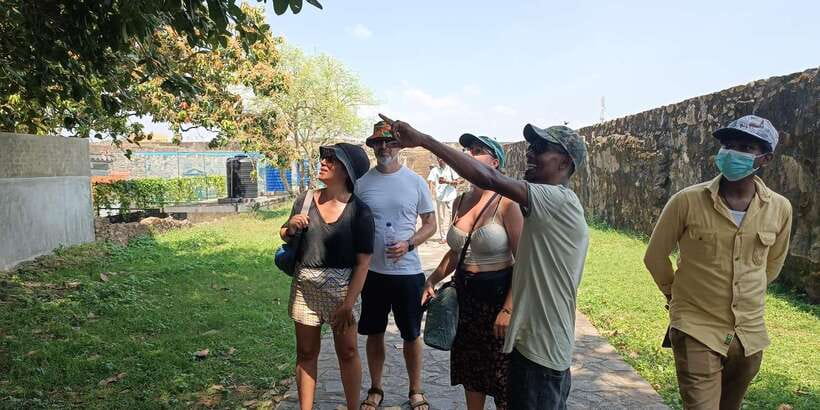
Galle Fort makes the most sense when you see it from the top of its walls. This 90-minute walk begins at the Clock Tower and Moon Bastion, then follows the ramparts and old streets past military walls, churches, hotels, shops, and the sea. Guide Madawa Galagedara brings the place to life with stories about Sri Lanka, not just dates and buildings.
I like the relaxed pace and the chance to ask questions as you go. I also like that Madawa connects the fort’s colonial past with present-day Sri Lankan life, culture, politics, and local customs. The main drawback is the heat, especially in the middle of the day, and one large group found that the size of the group slightly reduced the experience.
Key points to know before you book

- Moon Bastion begins the story: You start at one of the fort’s high points, with the Clock Tower nearby and clear context for the defensive walls.
- The tour covers more than the ramparts: You visit the Dutch Reformed Church, Dutch Hospital, old cinnamon storehouse, lighthouse, Flag Rock, Court Square, and Pedlar’s Street.
- Madawa is the main attraction: His English, humor, and ability to answer questions about Sri Lankan history and modern life are central to the experience.
- Late afternoon works well: The 4:30 p.m. start avoids some of the strongest heat and can finish near sunset on the ramparts.
- Bring water and sun protection: The fort offers shade in places, but much of the walk is open to the sun.
- The price is modest: At $15 per person, you get a focused introduction to Galle Fort without paying extra entrance fees.
Why a guide helps inside Galle Fort

You can walk Galle Fort alone, and it is pleasant enough to wander without a plan. The trouble is that the old walls and buildings do not always explain themselves. A weathered bastion can look like a fine photo stop, while the real interest lies in why it was built, how it fitted into the fort’s defenses, and how the city changed under different colonial powers.
That is where this tour earns its price. Madawa does not simply point at a wall and name it. He explains the fort as part of Sri Lanka’s wider story, then leaves room for questions. The strongest praise for his work centers on his English, humor, warmth, and ability to explain difficult subjects in a clear way.
You can ask about Galle, Sri Lankan history, local life, politics, religion, culture, economics, or the effects of the tsunami. Those subjects go beyond a standard sightseeing walk, so the tour suits you best if you want context rather than a quick list of dates.
The tone is informal. You are not expected to stand silently while a guide recites a speech. Several people found that Madawa welcomed a long run of questions and kept the walk light without losing the historical thread.
More Galle Fort Tours in Galle
- Galle Fort Walking Tour with a Resident
★ 5.0 · 88 reviews - Galle Fort cooking class
★ 5.0 · 60 reviews - Galle Fort Heritage Walk by a Certified Heritage Interpreter
★ 5.0 · 31 reviews
Starting under the Clock Tower
The meeting point is beneath the Galle Fort Clock Tower. Enter the fort through the new entrance and look to the right for the tower. This is a useful meeting place because it is easy to identify, but you should still allow time to find it if you are unfamiliar with the fort.
The tour then moves toward the fort’s higher ground, beginning with the Moon Bastion. The opening walk takes about 10 minutes. That short start gives Madawa time to set out the basic story of Galle Fort before you move through its streets.
The fort can feel confusing at first. Its walls, gates, bastions, and lanes do not form a simple sightseeing route. Starting high helps you understand the shape of the place before you are standing among its buildings.
Moon, Star, and Sun Bastions

Moon Bastion is an effective first stop because its higher position gives you a broad view of the fort and its defenses. Madawa explains the fort’s development and the role of the bastions before taking you toward Star Bastion and Sun Bastion.
These names are easy to remember, but the value is not just in collecting them. You begin to see Galle Fort as a working defensive town, not merely an old colonial quarter. The walls were built for protection, and the bastions helped guard different sides of the fort.
The exact amount of time spent at each bastion can depend on the group and the questions being asked. That flexibility is a strength if you enjoy conversation. It may be less appealing if you want a tightly timed tour with a long stop at every site.
Walking the ramparts above the sea

The ramparts are the most enjoyable part of the route. You walk along the outer walls, with open views and a better sense of the fort’s position. The path also gives you a break from the narrow streets and lets you see the fort as one connected structure.
This is where the weather matters most. The walls are exposed, and the sun can be strong. Bring a hat, sunscreen, and water. One person specifically warned that the area becomes very hot, and that is useful advice even if you choose a morning start.
The route is described as gentle and relaxed, but it is still a walking tour on old fort streets and walls. You need to be comfortable walking for 90 minutes. The activity is not suitable for people over 95, according to the booking information, and anyone who dislikes heat should choose the coolest available start.
The late afternoon is a particularly appealing option. A 4:30 p.m. start allows the heat to ease, and the tour may finish in time for sunset views from the ramparts. Morning is another good choice if you want cooler conditions and stronger energy at the beginning of the day.
More Walking Tours in Galle
- Galle Fortt Guided Walking Tour with a Local
★ 4.9 · 33 reviews - Galle Fort Walk with Glamorous Stories
★ 5.0 · 17 reviews - Galle Fort Walk with a Local
★ 4.5 · 7 reviews - Galle Fort Walking Tour with a local guide
★ 5.0 · 5 reviews
Aman Galle and the Dutch Reformed Church
As the walk continues, you see the Aman Galle hotel and the Dutch Reformed Church. The hotel gives you a look at how old colonial buildings have been adapted for modern use, while the church points to the Dutch period and the religious life that came with it.
The church is more useful when placed in its wider setting. Galle Fort was not only a military base. It was a place where officials, merchants, soldiers, religious figures, and local residents lived and worked. Madawa’s broader approach helps connect the building to that complicated social history.
You should not expect a long indoor museum visit. The main focus is the walk through the fort, with explanations delivered at the relevant places. That keeps the experience moving, but it also means the tour works best for someone who enjoys learning outdoors rather than studying objects in a formal collection.
Cinnamon storage and Court Square
The old Dutch cinnamon storage building adds an everyday commercial side to the tour. Cinnamon was important to Sri Lanka’s colonial economy, and the building helps you think about the goods that passed through Galle, not just the soldiers who guarded it.
This is one of the details you might easily miss when walking on your own. A plain-looking structure does not always reveal its former purpose. A guide can make it part of a larger story about trade, work, and colonial control.
The route then moves through Court Square. This change of setting is useful. You leave the defensive walls for a civic space, where the fort’s administrative side comes into view. The walk becomes less about military architecture and more about how the settlement functioned as a town.
Madawa also points out aspects of everyday Sri Lankan life, local plants and animals, and the way people use the fort today. That mix keeps the tour from feeling like a history lesson detached from the present.
Dutch Hospital and the move toward the lighthouse
The Dutch Hospital is another important stop. Its name tells you something about the practical needs of the settlement, and its location helps show how different buildings served the fort’s population.
Today, this part of Galle Fort has a more modern public life, but the older structure remains tied to the fort’s colonial past. Madawa explains the background as you move through the area, so you can understand the building without needing a separate museum visit.
From there, the route continues toward the lighthouse and Flag Rock Bastion. The lighthouse is one of Galle Fort’s most recognizable sights, but it is more satisfying when reached after walking through the fort’s walls, streets, church, court area, and hospital.
Flag Rock gives the route another strong viewpoint. It also keeps the focus on defense and navigation, two ideas that run through the fort’s story. The tour does not treat every stop as an isolated landmark. Instead, each one adds another piece to the way Galle worked.
Lighthouse Street, the old drainage system, and Pedlar’s Street

After the lighthouse, you continue along Lighthouse Street. This section shows the fort as a lived-in neighborhood, with old buildings and modern businesses sharing the same streets.
One unusual detail is the old drainage system. It is not the sort of feature most people would seek out, but it says a great deal about the practical side of an old fortified town. Walls and churches may attract attention, yet drainage, storage, and roads were essential to daily life.
The final stretch leads along Pedlar’s Street and ends at Pedlar’s Corner Cafe. Finishing there is convenient if you want to continue exploring the fort, stop for a drink, or use the street as a clear point from which to plan the rest of your afternoon.
Refreshments are not included, so bring water with you. You may also want to arrange your own drink after the walk, especially after a hot morning or afternoon in the sun.
What the guide adds to the experience
Madawa Galagedara is repeatedly praised for three things: clear English, a wide grasp of Sri Lankan history, and a friendly sense of humor. Those qualities matter because the tour covers subjects that can become dry if delivered as a list.
His strongest role is answering questions. You are not limited to the exact route. If you want to understand Sri Lankan politics, modern society, religion, culture, or the relationship between colonial history and present-day life, you can raise those subjects during the walk.
That also means the experience can vary with the group. A small group usually gives you more space to ask questions and hear the guide clearly. One person found the group larger than ideal, while other feedback describes groups of eight and a friendly atmosphere. If the booking allows different group sizes, check that detail before choosing.
The guide’s style is relaxed rather than formal. If you prefer a silent photo walk, the conversation may feel like too much. If you want to understand what you are seeing, the open question period is a major benefit.
Is $15 good value for 90 minutes?
At $15 per person, this is a reasonable way to get oriented inside Galle Fort. The price includes a professional guide and all entrance fees, so you do not need to add admission costs during the walk. Refreshments are extra.
The value comes from the route and the explanation together. You see major points such as the bastions, church, hospital, lighthouse, and ramparts, while also hearing about less obvious features such as the cinnamon storage building and drainage system.
A self-guided walk costs less, but it may leave you guessing about the purpose of individual buildings. A longer private tour might offer more time, but this 90-minute format is easier to fit into a day in Galle.
I would especially recommend it near the start of your time in Galle. After the walk, you will have a better idea of which streets and buildings deserve a second look. The tour also gives you a useful base for asking better questions during the rest of your Sri Lankan trip.
Best time to go and what to carry
The fort can be hot, and the ramparts offer limited protection from the sun. Morning is a sensible choice if you want cooler conditions. The 4:30 p.m. departure is also appealing because the heat may have eased and the ending can coincide with sunset.
Carry:
- A hat
- Sunscreen
- Drinking water
Wear comfortable footwear for walking on the fort streets and ramparts. The tour is described as gentle, but you should not treat it as a seated sightseeing activity.
English is the tour language. You meet under the Clock Tower and finish at Pedlar’s Corner Cafe, so plan your onward arrangements around those two points rather than assuming you will return to the Clock Tower.
The activity information gives Kotapola as the location, while the actual meeting point is in Galle Fort. Use the Clock Tower instructions when planning your arrival, and confirm the details at booking if you are staying outside Galle.
Who should book this Galle Fort walk?
I would choose this tour if you want a clear introduction to Galle Fort, enjoy asking questions, or prefer local explanation to reading signs and guidebooks. It suits couples, solo visitors, families with comfortable walkers, and anyone interested in Sri Lanka beyond postcard views.
It is also a good fit if you want history presented in plain English. Madawa’s style combines facts with humor, and the pace leaves room for conversation.
You may want another option if you dislike outdoor walking in heat, want a very small private group, or prefer a long, detailed visit inside each building. This is a broad overview rather than a full-day archaeological study.
Should you book it?
Yes, if you have 90 minutes and want Galle Fort to make sense. The route covers the essential sights, but the real strength is Madawa’s ability to connect bastions, churches, hospitals, trade buildings, politics, culture, and modern Sri Lanka.
Book a morning time for cooler walking, or choose around 4:30 p.m. for softer heat and the possibility of sunset on the walls. At $15, it is a practical first step into Galle Fort, especially if you want more than attractive streets and photographs.
FAQ
Where does the Galle Fort walking tour start?
It starts under the Galle Fort Clock Tower. When you enter through the new entrance, the Clock Tower is on the right.
Where does the tour finish?
The walk finishes at Pedlar’s Corner Cafe, at the end of Pedlar’s Street.
How long does the tour last?
The tour lasts 1.5 hours, or 90 minutes.
What places are included in the route?
The route includes the Clock Tower, Moon Bastion, Star Bastion, Sun Bastion, the fort ramparts, Aman Galle, the Dutch Reformed Church, the Dutch cinnamon storage building, Court Square, Dutch Hospital, the lighthouse, Flag Rock Bastion, Lighthouse Street, an old drainage system, and Pedlar’s Street.
Who leads the tour?
The tour is led by Madawa Galagedara, a professional local guide who speaks English.
What should I bring?
Bring a hat, sunscreen, and water. Refreshments are not included.
Can I cancel the booking?
You can cancel up to 24 hours in advance for a full refund. You can also reserve now and pay later, according to the activity information.
Newly listed around Galle
- Private Day Tour: Yala National Park Safari Tour from Galle & Weligama★ 5.0 · 3 reviews
- Kanneliya Rain Forest Tour★ 5.0 · 10 reviews
- Dediyagala Village Tour(from Galle, Mirissa, Ahangama, Matara)★ 5.0 · 8 reviews
- Private Galle Day Trip from Colombo/ Negambo / Bentota★ 5.0 · 35 reviews
- Day Excursions to Galle Fort & Bentota from Colombo★ 4.5 · 20 reviews
- Galle Day Tour★ 5.0 · 8 reviews
- Galle Day Tour★ 5.0 · 15 reviews
- Galle Day Tour with River Safari, Tea Plantation & Sea Turtle★ 5.0 · 11 reviews
Walking Tours, compared.



Galle Fort Heritage Walk by a Certified Heritage Interpreter
Read our review →


Browse the lists this tour appears in